 Cartagena City Guide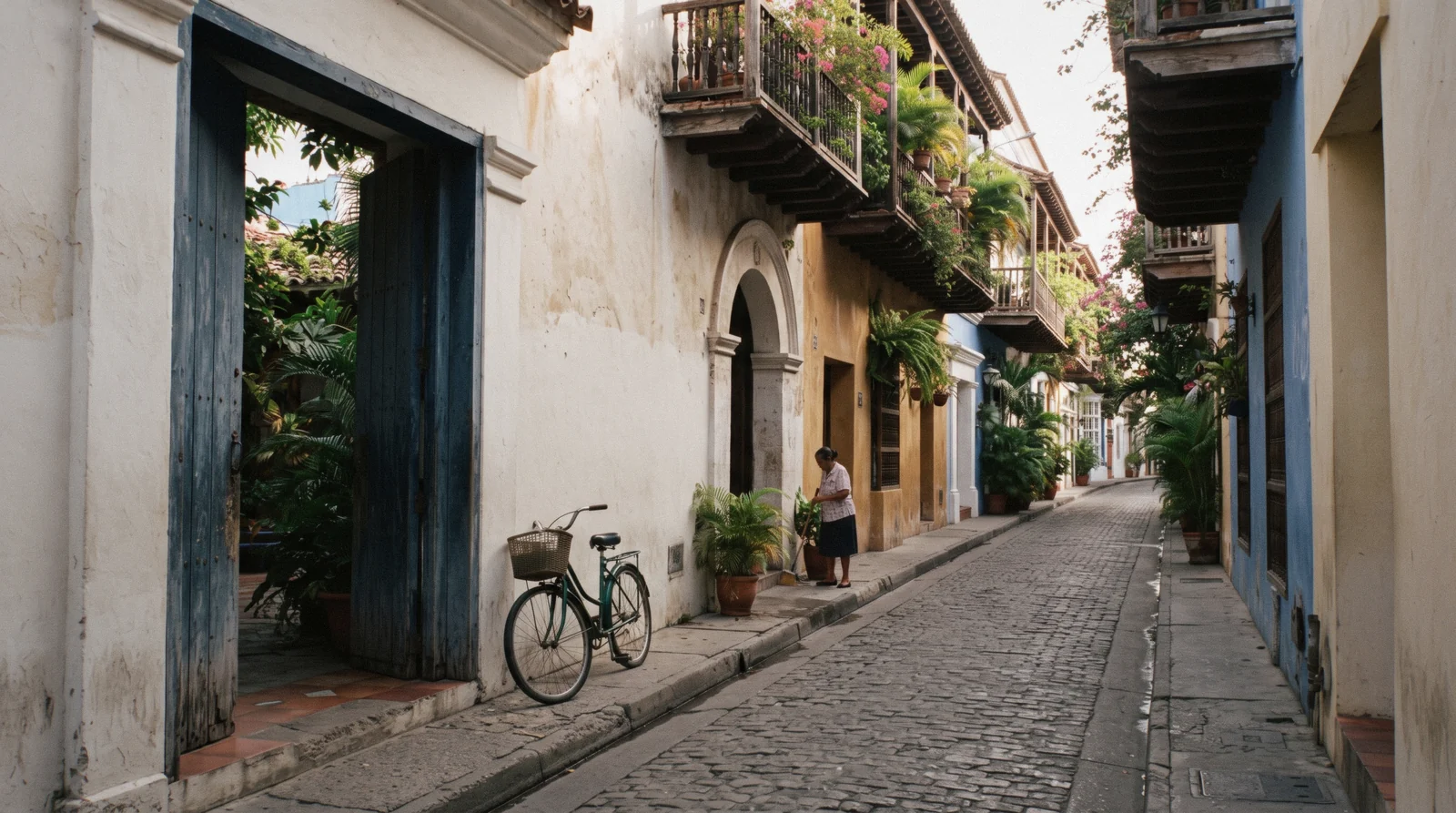
Where to Stay in Cartagena
Where to stay in Cartagena comes down to one trade: sleep inside the wall and pay the highest rate for a five-minute walk to everything, or sleep outside it and give up that walk for quiet, space or the beach. The six areas below, Centro Histórico, Getsemaní, Bocagrande, Castillogrande, Manga and La Boquilla, cover almost every traveller planning a trip from the rest of the Cartagena guide. No source publishes a nightly-rate table for any of them, so instead of inventing a price band this page compares what each area actually is: how far it sits from the Torre del Reloj, what the streets sound like after dark and who it suits. Once you have picked an area, the hotel cards near the bottom open a live search for that neighbourhood.
Quick answer First visit, nightlife, beach, quiet: one area for each
Stay in Centro Histórico for a first visit, because the fort's ticket line and the sunset walk on the wall are both a few minutes from the door. Stay in Getsemaní for the evening, because Plaza de la Trinidad is the city's real nightlife square and rooms cost less than inside the wall. Stay in Bocagrande or Castillogrande for a beach-first trip, because both sit on the peninsula's high-rise strip and neither is walking distance to the sights. Manga suits a quieter, more residential stay a short ride from the centre, and La Boquilla suits a resort-style beach stay farthest from the old town.
Key takeaways
- First visit and short stays: Centro Histórico, where the fort ticket and the walled-city walk are both close.
- Evenings and value: Getsemaní, a few minutes' walk from the wall and cheaper than sleeping inside it.
- Beach-first trips: Bocagrande and Castillogrande, the high-rise strip that trades the old town for the sea.
- Once you have picked an area, see hotel search links by neighbourhood.
Six areas compared
No source publishes a walking-distance or price table for these neighbourhoods, so the ranking reads off the one number the city does publish: the 2026 airport zone taxi fares.
| Area | Distance from the Walled City | Best for | Watch out for | Guide |
|---|---|---|---|---|
| Centro Histórico | Inside or at the wall itself | First visit, short stays, the fort and the museums on foot | The highest rates in the city and bar noise in the plazas until late | Centro Histórico section |
| Getsemaní | A few minutes' walk across from the wall | Evenings, nightlife, budget and mid-range travellers | Plaza de la Trinidad runs loud on weekends, later than Centro | Getsemaní section |
| Bocagrande | A taxi or bus ride, not a walk | Beach hotels, families, air-conditioned towers | Every sightseeing day means transport, not a walk | Bocagrande section |
| Castillogrande | The farthest of the six by the airport-zone fare table | A quieter, more residential stretch of the same beach peninsula | Longest taxi rides of any area on this list | Castillogrande section |
| Manga | A short taxi or bus ride, not a walk in the heat | A local, residential feel a few minutes from the centre by car | Few hotels compared to the other five, book ahead | Manga section |
| La Boquilla | Well outside walking range, along the northern beach highway | Resort-style beach stays, mangrove-tour access | A taxi both ways for every old-town day | La Boquilla section |
The fares price Centro closest to the airport hub and Castillogrande farthest, a rough but real proxy for how spread out the city is. Distance from the Walled City follows the same order, described by transport mode rather than a minute figure no source confirms. The zone fares behind this ranking are on Getting Around, secondary press relaying the district decree rather than the decree text itself, so treat them as a reading of relative distance, not an exact minute count.
The six areas on the map
Terracotta pins mark each area's approximate centre. The green pin is the Torre del Reloj, the reference point every distance above is measured against. These are area centres, not hotel addresses.
Centro Histórico: for a first visit, inside the wall
Centro Histórico is the walled Old City itself, the neighbourhood every guidebook photograph is taken in, and it is the answer for a first visit or a short stay. A room here puts the fort's ticket line, the museum circuit and the sunset walk on the ramparts all within a few minutes on foot, and it is the only area on this list where sightseeing needs no taxi at all. The airport-zone fare to Centro is the cheapest of the six, $4.06 (12,800 COP), which is one more sign of how close it sits to everything the city runs on.
The trade is noise and price. The plazas inside the wall carry bar and restaurant noise into the night, worse on weekends, and rooms here are the most expensive in the city because the address is the product. Ask for a courtyard-facing room rather than one on the street. Nothing about staying here needs a car: the streets are narrow, mostly one-way and built for foot traffic, not parking.
Airport zone taxi fares: Qué Buena FM, secondary press relaying the 2026 district decree.
Getsemaní: the walking-distance value pick
Cross the roundabout by the clock tower and you are in Getsemaní, the working-class neighbourhood turned street-art and nightlife district that now covers most of the city's budget and mid-range beds. It sits a few minutes' walk from the wall, close enough that the distance from Centro is a difference in price and noise, not in what is reachable on foot. Plaza de la Trinidad is the reason to be here: it is the real nightlife square of the city, with music, food carts and a crowd that builds every evening.
That square is also the trade-off. Rooms on or near Plaza de la Trinidad run loud later than anywhere in Centro, especially Friday and Saturday, so a street back from the plaza sleeps considerably better than a room on it. For anyone weighing evenings against a quiet night's sleep, Getsemaní is the neighbourhood built around choosing the first.
Bocagrande: the beach strip, a taxi from everything historic
South of the old city, past Manga and across a short causeway, Bocagrande is a different Cartagena: a long peninsula of modern high-rise hotels facing the Caribbean, closer in feel to a resort strip than to the colonial centre. It is the area for a beach-first stay, air-conditioned towers with pools, and evenings that are quieter than Getsemaní's because the nightlife here belongs to hotel bars rather than a street square.
What it costs you is the walk. Bocagrande is not close to the Walled City. Every sightseeing day means a taxi or a Transcaribe ride rather than a stroll, and the airport-zone fare to Bocagrande, $6.92 (21,800 COP), is markedly higher than Centro's, a rough proxy for how much farther out it sits. Choose Bocagrande for the beach and accept the transport line in the budget, not for a walkable old-town trip.
Castillogrande: the quiet end of the same peninsula
Castillogrande is the southern continuation of the Bocagrande peninsula, past El Laguito, and it reads as the calmer half of the same strip: fewer big hotel chains, more residential towers and apartment-style stays, and a marina-side stretch instead of Bocagrande's busier beachfront. It suits travellers who want the peninsula's sea air and quiet without the concentration of hotel bars and tour touts that Bocagrande's main strip carries.
The cost is distance. The airport-zone fare table groups Bocagrande and Castillogrande into its farthest zone, $8.73 (27,500 COP), the highest of the six areas on this page, which tracks with Castillogrande sitting at the tip of the peninsula, farthest from the wall of any area here. A stay here means the longest taxi rides on this list for every old-town day, museum visit or evening in Getsemaní.
Manga: a residential island a short ride from the centre
East of Centro, across a bridge, Manga is a historic residential island of early-twentieth-century mansions, many now converted into smaller hotels and guesthouses, set in streets that belong to Cartagena's own residents more than to visitors. It is not walking distance to the wall in the Caribbean heat, but the ride in is short, and the airport-zone fare to Manga, $5.74 (18,100 COP), sits between Centro's and Bocagrande's, consistent with it being closer to the centre than either beach peninsula.
Manga suits a traveller who wants a local, quieter base without paying the beach-peninsula distance, and who is comfortable arranging a short taxi or bus for each sightseeing day. The trade is inventory: there are far fewer beds here than in the other five areas, so book ahead rather than expecting to choose on arrival.
La Boquilla: resort beach, farthest from the old town
La Boquilla is the fishing village and beach strip on the city's northern edge, past the airport and along the coastal highway, where the mangrove canoe tours leave from and where a newer run of beachfront resorts and hotels has grown up facing open sand rather than a bay. It is the area for a resort-style beach stay that is genuinely separate from the old town's crowds and noise, with the mangrove tours on the doorstep.
Distance is the honest trade. The airport-zone fare to La Boquilla, $4.89 (15,400 COP), is lower than Bocagrande's or Manga's because the airport itself sits on the city's north side near here, not because Boquilla is close to the Walled City. It is not. Every old-town day from here means a taxi or bus each way along the highway, which is a real time and money cost worth weighing against the quieter beach.
Search hotels by area
No source publishes a nightly-rate table for any of these neighbourhoods, so no price band is printed here rather than guessed. Each card below opens a live hotel search for that area instead. We take a commission if you book through these links, at no extra cost to you. See the affiliate disclosure.
Centro Histórico
- Distance from the wall
- Inside the wall
- Suits
- First visit, short stays, sightseeing entirely on foot
The highest rates in the city, and courtyard rooms sleep better than street-facing ones.
See stays in Centro HistóricoGetsemaní
- Distance from the wall
- A few minutes from the wall
- Suits
- Evenings, nightlife, budget and mid-range travellers
A street back from Plaza de la Trinidad sleeps far better than a room on it.
See stays in GetsemaníBocagrande
- Distance from the wall
- Taxi or bus to the Walled City
- Suits
- Beach-first trips, families, high-rise hotel towers
Budget a taxi or Transcaribe ride for every sightseeing day.
See stays in BocagrandeCastillogrande
- Distance from the wall
- The longest ride of the six areas
- Suits
- A quieter stretch of the same beach peninsula
Fewer big hotel chains than Bocagrande, more apartment-style stays.
See stays in CastillograndeManga
- Distance from the wall
- A short taxi or bus ride
- Suits
- A local, residential feel close to the centre
Fewer beds than the other areas here, so book ahead.
See stays in MangaLa Boquilla
- Distance from the wall
- Farthest from the Walled City by road
- Suits
- Resort-style beach stays and mangrove-tour access
Every old-town day is a taxi or bus ride each way along the highway.
See stays in La BoquillaRates and availability are live on the operator's own site. Check the dates you actually want.
Which area fits you
If this is a first visit of two or three nights, Centro Histórico is the straightforward answer: everything on the must-see list is a few minutes away, and the extra cost buys back the time a taxi would otherwise eat every day. If evenings matter more than a quiet room, Getsemaní gives the same walking distance to the wall at a lower rate, with the trade being Plaza de la Trinidad's noise on weekends.
If the beach is the point of the trip rather than the old town, Bocagrande or Castillogrande are the honest choices, and between them Castillogrande is the calmer, more residential half of the same strip. Manga suits a traveller who wants a local, lower-key base and does not mind a short taxi each way, and La Boquilla suits a resort-style beach stay for someone who has already decided the Walled City is a day trip from where they sleep, not the neighbourhood itself. None of these six is the wrong answer. They are six different trips wearing the same city's name.
The first-evening walk, wherever you sleep
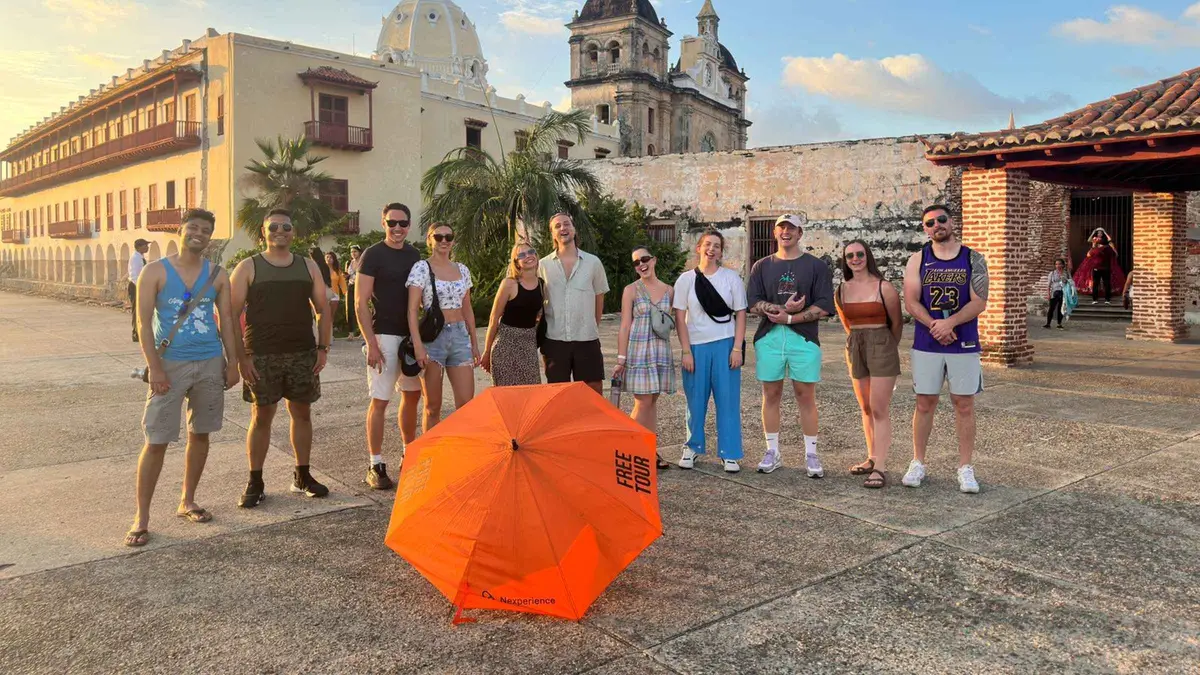
One booking that works from any of the six areas above: a guided walk through the historic centre and Getsemaní, rated 4.9 from more than 3,500 reviews, to get oriented before deciding how you want to spend the rest of the trip. Figures. Figures current in Q3 2026.
 from $14.81
Cartagena: Historic Center and Getsemaní Shared Walking Tour
A shared 2.5-hour walk through the Walled City and into Getsemani, covering the slave-trade history, the Clock Tower and the plazas behind it. Groups can run large since it's a shared departure, and there's no seating or shade break built into the route.
Check AvailabilityPrices, ratings and details are the platform's own. dollar figures are the listed prices — the platform bills in your account's currency.
Plan the rest of the stay
Getting around Cartagena
Transcaribe fares, taxi rules and the airport-zone table behind the distances on this page: Getting Around.
$1.24 (3,900 COP) Transcaribe fareSafety and scams
The realistic risks by area and the fixes for each: Safety and Scams.
Petty scams, not violent crimeHow many nights Cartagena needs
Two nights against five, mapped to what fits: the Cartagena city guide.
3 nights is the first-visit sweet spotWhere to stay in Cartagena: questions
Where should I stay in Cartagena for the first time?
Centro Histórico, the walled Old City itself. The fort's ticket line, the museum circuit and the sunset walk on the ramparts are all a few minutes on foot, and it is the only area on this page where sightseeing needs no taxi. See Centro Histórico.
What is the safest area to stay in Cartagena?
No source ranks Cartagena's neighbourhoods by crime statistics, so no area is named as safest here. In practice, Centro Histórico, Getsemaní and Bocagrande are the three busiest, best-lit areas after dark. General safety patterns and fixes, not an area ranking, are on Safety and Scams.
Should I stay in the Walled City or in Bocagrande?
Walled City (Centro Histórico) if the old town and its sights are the trip. Bocagrande if the beach and a high-rise hotel tower are the point and you accept a taxi for every sightseeing day. Both are compared in the six areas table.
Is Getsemaní a good place to stay in Cartagena?
Yes, for travellers who want walking distance to the wall at a lower rate than Centro and do not mind Plaza de la Trinidad's weekend noise. A room a street back from the plaza sleeps considerably better than one on it. See Getsemaní.
Where should I stay in Cartagena for nightlife?
Getsemaní, specifically near but not directly on Plaza de la Trinidad, which is the city's real nightlife square. Centro Histórico's plazas also carry bar noise into the night. See Getsemaní.
How far is Bocagrande from the Walled City?
Far enough that it is a taxi or bus trip, not a walk. No official distance table exists, but the airport-zone taxi fare to Bocagrande, $6.92 (21,800 COP), is markedly higher than Centro's $4.06 (12,800 COP), a rough sign of how much farther out the peninsula sits. See Bocagrande.
Is Manga a good area to stay in Cartagena?
For a local, residential feel a short taxi from the centre, yes. For walking to the sights, no. Manga has far fewer hotel beds than the other five areas on this page, so book ahead. See Manga.
Prices, hours and terms are set by the venue or operator and confirmed at checkout.
We may earn a commission if you book through one of our links, at no extra cost to you. Full affiliate disclosure