 Cartagena City Guide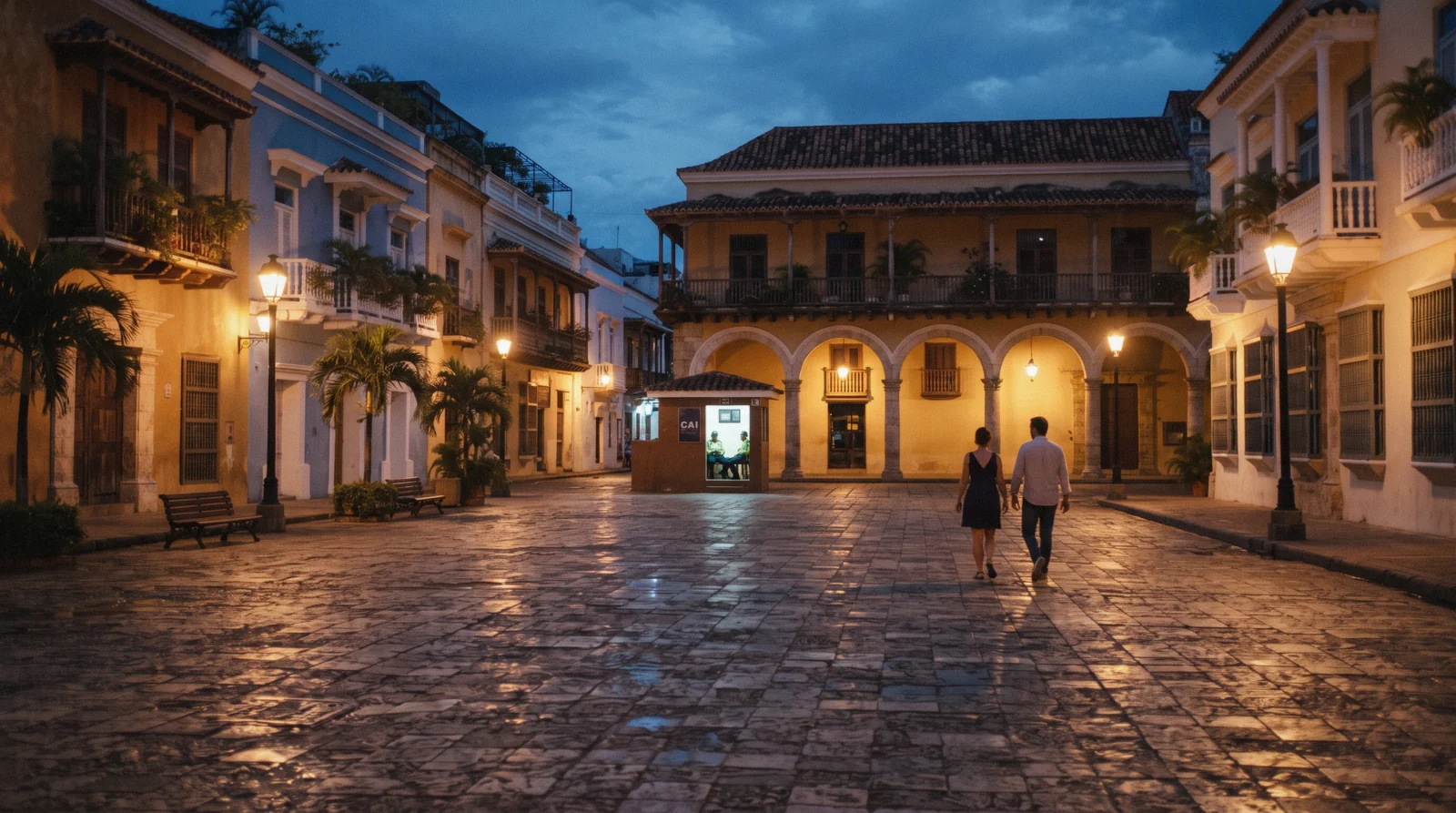
Is Cartagena, Colombia Safe? Safety Tips and Scams to Know
Is Cartagena, Colombia safe? Yes, in the way that matters for a trip like yours, and this page is the safety companion to the Cartagena city guide. Violent risk to tourists in the historic center is low, and neither the UK nor the US government lists the city itself on an advise-against list. Petty theft and a handful of well-known scams are real, and this page covers the official advisories, the specific patterns and the fixes for each one, plus the emergency numbers worth having on hand.
Quick answer Short answer to: is Cartagena, Colombia safe?
Yes, Cartagena is safe for visitors in the way that matters for a trip like yours. The UK FCDO does not list Cartagena on its advise-against list and the US State Department does not place the city in its Do Not Travel category. The realistic risks here are petty crime and scams, not violence targeting tourists. The main things to guard against are pickpocketing, drink-related robbery using scopolamine, dating-app setups, unlicensed taxis, overpriced beach services and the isolated road up to La Popa. A guided first walk is an easy way to learn the street patterns on day one.
Key takeaways
- Neither government travel advisory lists Cartagena itself as a no-go area, so the city is open for travel.
- The number one drug threat is scopolamine, so never accept a drink you did not see poured or opened.
- Cartagena taxis have no meters and the official fare figures conflict, so confirm the printed fare card before you ride. See our getting around guide.
- The hilltop at La Popa should be reached by taxi that waits or a tour, never on foot.
What the UK and US governments actually say about Cartagena
Both governments publish country-level advice for Colombia. Neither names Cartagena itself as a place to avoid, but both describe crime patterns that apply to the Caribbean coast. Here are the direct findings.
The UK position
The UK FCDO states: "Pickpocketing, mugging and armed robbery are a problem, especially in major cities, including Bogotá, Medellín, Cali and the Caribbean coast." The FCDO advises against all but essential travel to a list of specific regions. Cartagena does not appear anywhere on that list. The one Bolívar-department entry on it is "the southern part of Bolívar Department," which is inland. Cartagena, the coastal city, is not on the FCDO's advise-against list. That distinction matters: the department Cartagena sits in has a flagged zone, but it is not the city.
On drink-assisted robbery, the FCDO warns: "The British Embassy has received reports of criminals in Colombia using drugs to subdue their victims. This includes the use of scopolamine, which temporarily incapacitates victims." On dating apps, the FCDO states: "Criminals use dating applications and websites to identify and lure foreign nationals who are travelling alone and looking to meet local people." On taxis, the FCDO says: "There have been reports of express kidnappings, assaults and robberies in unlicensed taxis. Use licensed telephone or internet-based taxi services whenever possible or book through your hotel."
The US position
The US State Department puts Colombia at Level 3, Reconsider Travel, a status reaffirmed around 31 March 2026, citing crime, terrorism, civil unrest, kidnapping and natural disasters. Level 3 is a country-wide rating. The departments on the Level 4 Do Not Travel list are Arauca, Cauca (except Popayán), Valle del Cauca (except Cali), Norte de Santander, and the area within 10 km of the Venezuela border. Cartagena and the Bolívar department are not on that Level 4 list.
For a US visitor the practical reading is this: the government says think carefully about the trip at country level, but it does not single out Cartagena as one of the places where it says do not go. All of the advice below is about managing the specific street-level risks the FCDO and press reporting describe.
The honest crime picture: petty crime, not violence against visitors
Cartagena's tourism economy runs on the walled city, Getsemaní, Bocagrande and the islands. The crime that touches visitors is overwhelmingly opportunistic rather than violent. It pays to know which numbers are solid and which are not.
What the advisories describe
The FCDO framing for the Caribbean coast is pickpocketing, mugging and armed robbery as problems in major cities. For Cartagena specifically, the risks travelers report are snatched phones, bag theft in crowded plazas, and the scams covered on this page. None of the official material in our research describes tourists being targeted by organized violence inside the historic center.
The FCDO also warns about express kidnappings in unlicensed taxis, which is why the taxi section below matters.
A caveat on crime statistics
No official Cartagena-specific crime-statistics source was located in this research pass. A press figure of 379 homicides in Cartagena in 2024 against 368 in 2023, and a reported 157% rise in extortion complaints between 2019 and 2022, circulate in media coverage, but neither figure is sourced to an official statistics body such as the Policía Nacional or DANE in our sources. We print that caveat rather than the numbers as fact.
If you want hard local data, look for the official bodies directly rather than secondary reporting.
What this means for your trip
Treat Cartagena like any big city with a gap between tourist and local incomes. Keep phones off restaurant tables, carry the cash you need rather than everything you have, and use the tourist police infrastructure the city actually provides. The walled city walk on this page covers the streets where most of this happens.
Scopolamine and drink spiking: the burundanga risk
This is the most serious scam pattern in Colombia for travelers and it starts innocently, usually with a friendly stranger and a drink. The FCDO names the drug directly.
The documented pattern
The UK FCDO states: "The British Embassy has received reports of criminals in Colombia using drugs to subdue their victims. This includes the use of scopolamine, which temporarily incapacitates victims." Scopolamine is known locally as burundanga. Victims describe losing the ability to resist while remaining superficially functional, then being walked to ATMs or handing over belongings.
There is a documented case cluster from 2023: at least 35 tourists were robbed that year, including a dating-app-facilitated ring nicknamed "Las Tóxicas," with three arrests in a police operation called "Seguridad 360." This is a 2023 figure, not necessarily the current count. No newer official figure was found in this research.
How the approach works
The common setups involve a stranger offering a drink, gum, a cigarette, a pamphlet or help with your belongings, or a document or powder handed to you on the street. Sometimes a friendly local suggests a specific bar and the drink there is pre-prepared. It can happen to anyone, alone or in a group, and men are targeted as often as women.
The fix
Never accept a drink you did not see poured or a bottle you did not see opened. Watch your glass the whole time, including in a busy bar. Decline drinks, cigarettes, gum or pamphlets from strangers, and politely decline anyone who wants to hand you something to hold or read.
If a stranger buys you a drink, refuse it. If you feel suddenly disoriented, tell staff or your hotel immediately and get to a safe, staffed place.
Dating-app robberies: how the lure works
Dating apps are the second documented lure pattern. The FCDO covers it in plain language and the 2023 "Las Tóxicas" case showed how it plays out in practice.
The official warning
The UK FCDO states: "Criminals use dating applications and websites to identify and lure foreign nationals who are travelling alone and looking to meet local people." The 2023 case cluster tied to scopolamine included a dating-app-facilitated ring, so the two patterns overlap: the app identifies an isolated traveler, the meeting place is controlled by the other party, and the drug or an armed group does the rest.
The fix
Meet in a public place that you chose, not one your match proposed. Tell someone at your hotel or a friend your plans, who you are meeting and where. Do not go to a private residence, apartment or hotel room on a first meeting, however long the conversation has run.
Keep your own drinks rule from the section above. If the person pushes hard to move the meeting somewhere private or orders drinks for you, treat that as your exit signal.
The emerald and fake-gem pitch
A stranger tells you a story about a mining connection, offers emeralds or other gems at a fraction of their value, and the stones turn out to be glass or worthless. This category appears constantly in press coverage of Cartagena scams.
The pitch
The script varies but the structure is the same: a friendly approach, a claim of special access or a family connection to a mine, urgency about the price, and a refusal of any official receipt. Aggressive street selling of jewelry and stones around the plazas and the cruise docks fits the same family. These categories, along with fake police and aggressive beach vendors, are commonly reported in press coverage, but no single official advisory page itemizes them.
We are stating that sourcing gap plainly rather than inventing an official source.
The fix
Buy gemstones only from a licensed jeweler, insist on a receipt, and ask for certification of the stone. Never buy from a street offer, however convincing the story or the discount. If you did not walk into a shop intending to buy jewelry, the answer to the pitch is no.
Taxi fares compared: no meters, a printed fare card, and a conflict in the official numbers
Cartagena has no taxímetros, which makes it the only Colombian city above one million people without taxi meters. Fares are fixed by a printed control card under a decree, never negotiated and never read off a meter. The current figures are where this page has a genuine sourcing problem: our 2026 reading under Decreto 0051, reported by El Universal, conflicts with a separate cartagena.gov.co snippet, and the primary decree page itself returned HTTP 403 and could not be directly confirmed. Both readings are shown below, unresolved.
The two readings, side by side
This table compares the two conflicting readings of the official taxi fare card: the Decreto 0051 figures reported by El Universal against the cartagena.gov.co snippet, which may reflect an earlier year.
| Fare | Decreto 0051 reading | cartagena.gov.co reading | Fix |
|---|---|---|---|
| Minimum fare (carrera mínima) | $3.89 ($12,250 COP) | $3.11 ($9,800 COP) | Ask the driver or your hotel to show you the printed fare card before the ride starts |
| Night surcharge, 7:00 p.m. to 5:00 a.m. | $0.35 ($1,100 COP) | $0.29 ($900 COP) | Expect a surcharge after 7:00 p.m. and confirm its amount on the same card |
What to actually do
Do not expect a meter, ever. Do not negotiate a price for a standard in-city ride, because the fare is fixed by the card, not agreed verbally. The reliable move is to ask your driver, or your hotel front desk before you get in, to confirm the current minimum fare and the night surcharge on the printed control card.
Use licensed telephone or internet-based taxi services where you can, as the FCDO advises, because the documented crimes in taxis involve unlicensed vehicles. Airport taxi zone fares and the Transcaribe alternative are covered on our getting around page. Figures current in Q3 2026.
Beach vendors and massage sellers: the price arrives after the service
At Playa Blanca and on the city beaches, vendors and massage sellers commonly quote a price only after the service is delivered, leaving you negotiating from a position of no leverage.
The pattern
A vendor opens a bag of fruit on your table, a massage seller starts working on your shoulders, or a fresh plate of fish arrives, and only then does the number appear. Because the item is already opened, touched, cooked or started, refusing feels impossible and the quoted price can be far above any local norm. It is worth noting that no Cartagena-specific official vendor-harassment advisory exists, so this guidance is practical rather than regulatory.
The fix
Agree the exact price for the exact item before anything is opened, touched, cooked or started. If a vendor approaches with goods, say the price question first. If a massage seller stops by, settle the full price and duration before a single touch.
If no price is agreed, the answer is no, and you can simply stand up and move. Full planning for that beach, including how to get there, is on our Playa Blanca page.
La Popa: do not walk up the hill
The Convento y Cerro de la Popa sits on the highest hill above the city and offers the classic viewpoint over the harbor. It is also the one sight in Cartagena where the approach itself is the risk.
The access reality
The hilltop is not walkable from the historic center. It is reached only by taxi or an organized tour. The approach road has a reputation for robberies.
This is a gotcha passed on by tour operators rather than an official government finding, so treat it as local operational knowledge. Tour operators recommend a taxi that waits for you at the top, or a guided tour, and never an independent walk or an unofficial moto-taxi. The official site lists the convent as open daily 7:00 a.m. to 6:00 p.m., though third-party sources give 8:30 a.m. to 5:30 p.m., so confirm timing when you book.
Full details are on our Convento de la Popa page.
Safety do's and don'ts in Cartagena
Every item here comes from the fixes in the sections above. They are small habits, and together they cover nearly every scam pattern reported in the city.
Do
- Watch every drink being poured or the bottle being opened, and keep a hand on your glass.
- Ask the driver or your hotel to confirm the printed taxi fare card before the ride, and expect no meter.
- Agree the exact price for the exact item with beach vendors and massage sellers before anything is opened, touched or started.
- Take a taxi that waits for you up to La Popa, or book a guided tour for the hill.
- Dial 123 for any emergency. It is national, free and answered 24/7, and the tourist police in the walled city can take a report.
- Meet dating-app matches in a public place you chose and tell someone your plans first.
Don't
- Do not hand a stranger your wrist, arm or belongings for a 'gift', a blessing, a bracelet or a photo.
- Do not accept drinks, gum, cigarettes or pamphlets from strangers, however friendly the approach.
- Do not go to a private residence or hotel room on a first meeting arranged through a dating app.
- Do not buy emeralds or gems from a street pitch instead of a licensed jeweler with a receipt and certification.
- Do not walk to or from La Popa on foot or take an unofficial moto-taxi up the hill.
- Do not hand your phone to a self-described plainclothes officer asking to inspect it, and head to a staffed tourist police point instead.
Emergency numbers and the tourist police
Cartagena has a functioning tourist-facing police infrastructure. Knowing where it is before you need it is half the job.
Who to call and where to go
The number 123 is the national emergency line. It is free, staffed 24/7 and covers police, medical and fire response. The Tourist Police (Policía de Turismo) have a visible presence in the walled city.
Centers for Tourist Attention operate at the La Bodeguita dock and in Bocagrande. If you need to file a complaint, the national police accept them online at adenunciar.policia.gov.co.
| What you need | Where to go / what to dial | Detail |
|---|---|---|
| Any emergency | Dial 123 | National number, free, 24/7 |
| In-person police help | Tourist Police in the walled city | Visible patrols inside the historic center |
| Tourist assistance | Centers for Tourist Attention | At La Bodeguita dock and in Bocagrande |
| Filing a complaint | adenunciar.policia.gov.co | National police online complaint form |
A guided first walk beats learning the streets the hard way
Most of the risks above are street patterns: who approaches you, in which plazas, with which story. A guided walk on your first day points those patterns out while someone local is watching the group. This one covers the walled center and Getsemaní on foot.
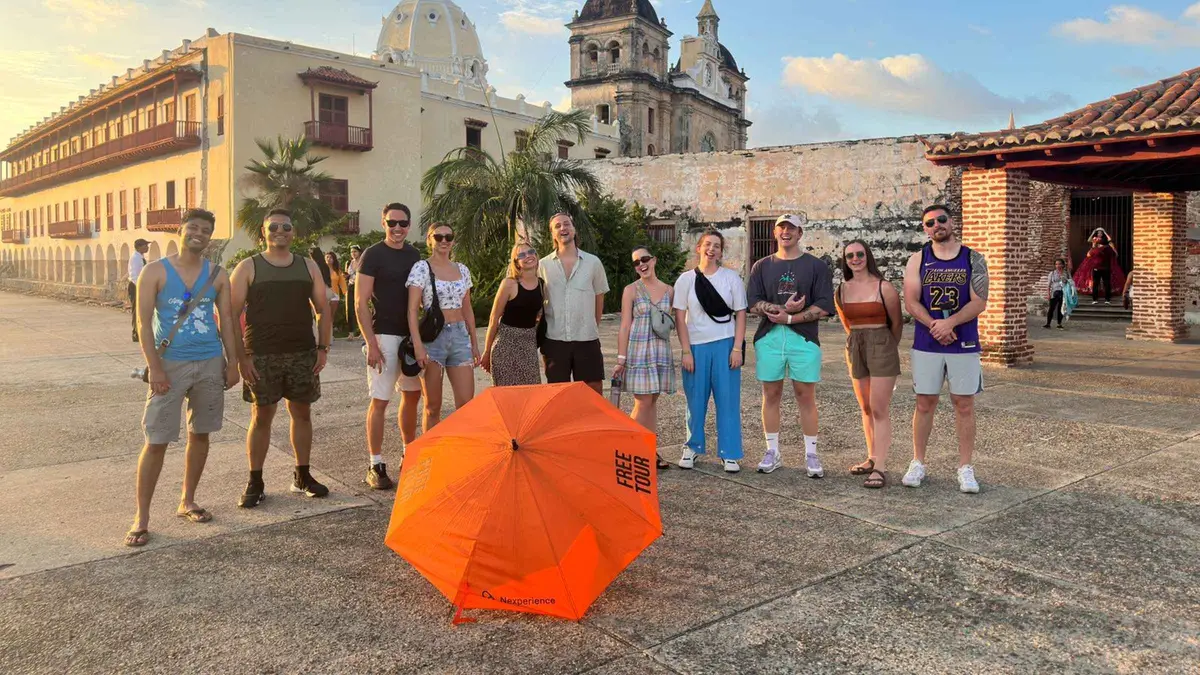 from $14.81
Cartagena: Historic Center and Getsemaní Shared Walking Tour
A shared 2.5-hour walk through the Walled City and into Getsemani, covering the slave-trade history, the Clock Tower and the plazas behind it. Groups can run large since it's a shared departure, and there's no seating or shade break built into the route.
Check AvailabilityPrices, ratings and details are the platform's own. dollar figures are the listed prices — the platform bills in your account's currency.
Where To Go Next
Getting around Cartagena
Taxis, the Transcaribe bus system and airport transfers, with the fare figures that pair with this page.
Castillo San Felipe de Barajas
The fortress every first visit includes, with current admission prices and visiting basics.
Plan your trip
Start here for the full Cartagena city guide and all our planning pages.
Safety and scams FAQ
Is Cartagena, Colombia safe for Americans?
Cartagena is not on any US Do Not Travel list, and Colombia carries a country-wide Level 3 Reconsider Travel rating that is not specific to the city. American visitors face the same risk profile as other foreigners: pickpocketing and the scams on this page rather than violence. Learn the drink and taxi rules on this page before you go, and consider starting with a guided walk.
What should I avoid in Cartagena?
Avoid drinks you did not see poured, dating-app meetings in private places, unlicensed taxis, street gem sellers, unpriced beach services at Playa Blanca, and walking to La Popa. Each of these maps to a documented scam pattern covered in the sections above.
Is it worth visiting Cartagena, Colombia?
The walled city, the fortress and the islands are the reason the city draws so many visitors, and neither the UK FCDO nor the US State Department advises against the city itself. The risks are manageable street-level ones. Plan the things to do with the safety fixes on this page and the trip holds up well.
Is Cartagena safe to walk at night?
Stick to busy, lit streets in the walled center and Getsemaní, take a taxi rather than walking between neighborhoods after dark, and expect the night surcharge on fares between 7:00 p.m. and 5:00 a.m. The FCDO's taxi warning applies specifically to unlicensed vehicles, so book by phone or app or through your hotel. Our getting around page covers the options.
Is Cartagena safe for solo women travelers?
The documented lures, including the scopolamine cases and the dating-app ring, targeted solo travelers of both sexes, so the precautions matter more than for groups. Decline drinks from strangers, meet people in public places you chose, and tell your hotel your plans. A shared walking tour is a low-risk way to get oriented on arrival.
Is Cartagena safe for cruise passengers on a day visit?
Cruise passengers concentrate exactly where the tourist police presence is: the walled city and the La Bodeguita dock, which also hosts a Center for Tourist Attention. Watch for aggressive vendors near the docks, agree prices before accepting anything, and keep the emergency number 123 handy. A short guided walk fits a port day and covers the main streets safely.
Cartagena Safety On Camera
Three clips that show the pickpocket patterns, the general safety picture and the tourist-trap approaches described above, filmed in the city rather than reconstructed.
PART 1: I Got Pickpocketed TWICE in Cartagena | 10 Tips to Survive Colombia
A firsthand account of the crowd pickpocketing pattern this page covers, with the traveler's own fixes.
Video: Making Big MovesIs Cartagena Safe for Travel? Insider Tips 2023
A local-informed rundown of what to watch for in the walled city and Getsemaní.
Video: dcbornrob - Erasing BordersCARTAGENA, COLOMBIA | What to do, What to see, Where to Eat & TOURIST TRAPS
Shows the street-vendor and tourist-trap approaches named on this page in the plazas where they happen.
Video: ON World TravelVideos load from YouTube only when you press play.
Prices, hours and terms are set by the venue or operator and confirmed at checkout.
We may earn a commission if you book through one of our links, at no extra cost to you. Full affiliate disclosure