 Cartagena City Guide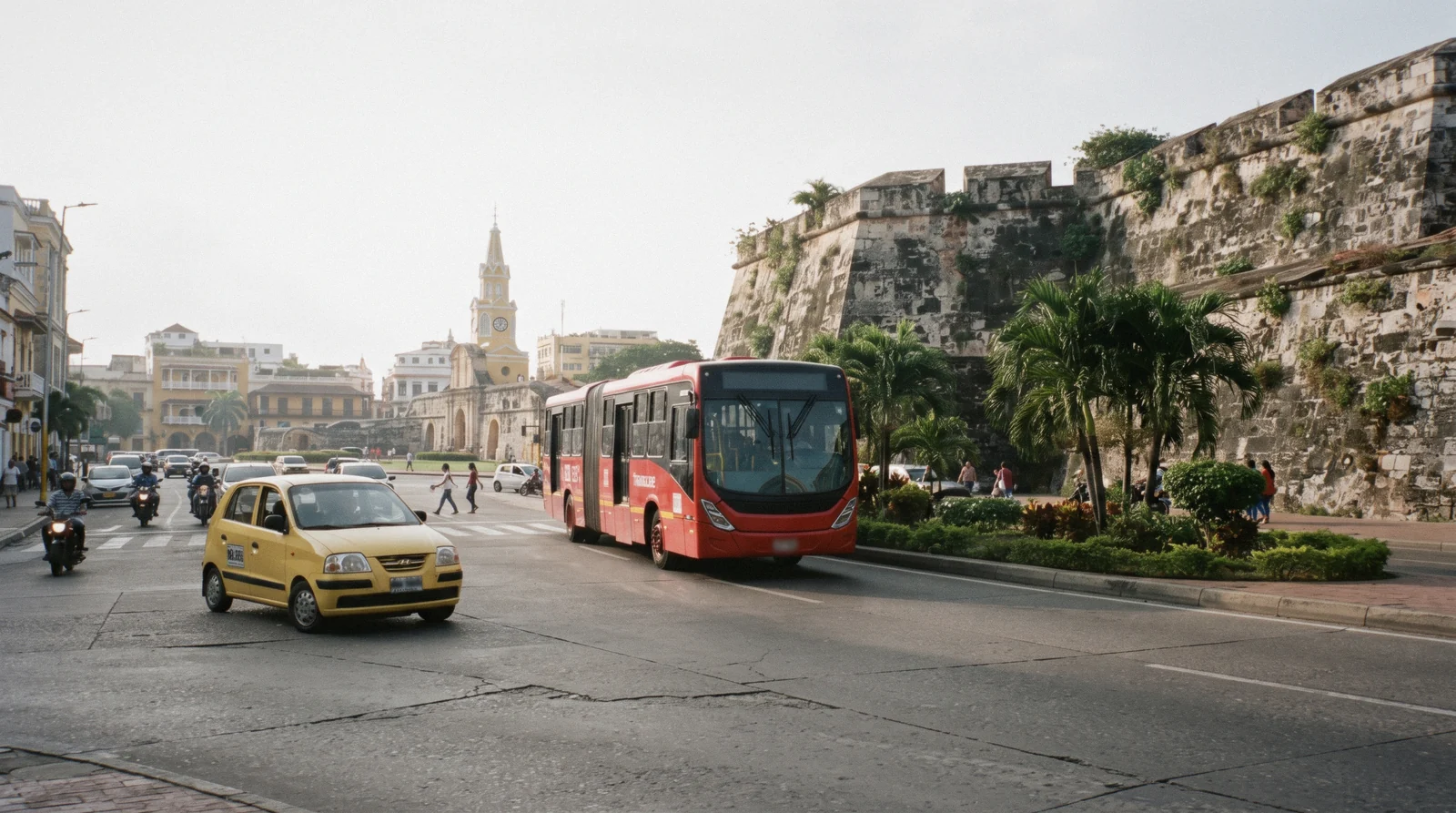
Getting Around Cartagena: Transcaribe, Taxis and the Airport
Getting around Cartagena splits neatly into two questions, and this page is the transport companion to the Cartagena city guide. The walled center, Getsemaní and the near end of Bocagrande are walkable, and nothing in the historic core requires a vehicle. For longer hops you will meet a fixed-fare taxi system with no meters, the Transcaribe bus network and a ride-hailing scene that is neither legal nor banned. This page lists every confirmed figure, every unpublished gap and every conflicting number found in official sources, so you can tell which prices to trust and which to treat as a rough guide. Money changes hands the moment you leave the airport, so it is worth reading the taxi section below before your bags are even off the belt.
Quick answer How to get around Cartagena
Walk the walled city. It is compact, flat and everything in the historic core sits within a short stroll. Use Transcaribe for longer hops at $1.24 (3,900 COP) a ride. Taxis have no meters at all. Fares come from a printed fixed-fare control card, so confirm the price with the driver or your hotel before you get in.
Key takeaways
- The historic core, Getsemaní and the approaches to Bocagrande are walkable, so picking where to stay near the center can spare you most daytime transport.
- Transcaribe's single fare rose to $1.24 (3,900 COP), up from $1.08 (3,400 COP), and a differential discount of $0.32 (1,000 COP) applies to more than 27,000 registered users.
- Cartagena is the only Colombian city over 1 million people without taxi meters, so the printed fare card decides your price. Read our notes on taxi safety and unlicensed cabs before you hail one.
- Landing at Rafael Núñez? Use only the two authorized taxi stations at the arrivals exits, or skip the fare question with a private airport transfer.
Transcaribe: fares, discounts and what is not published
Transcaribe is Cartagena's bus rapid transit system, running articulated buses on dedicated lanes across the city. It is the cheapest practical way to cover distances your legs will not want to. The fare went up in 2026 under a municipal decree, and a separate decree created a subsidized fare for registered users. Several basics, including the card cost and daily operating hours, are simply not published on official pages.
What the single fare costs now
The single fare is $1.24 (3,900 COP), effective Friday 23 January 2026, up from $3,400 COP ($1.08) through 2025. The increase was set by the Alcaldía de Cartagena and announced through Transcaribe's own news page.
| What | Figure | Source note |
|---|---|---|
| Single fare, effective Friday 23 January 2026 | $1.24 (3,900 COP) | Announced by the Alcaldía via Transcaribe's official news page |
| Single fare through 2025 | $1.08 (3,400 COP) | The prior rate, kept here for comparison |
| Differential/subsidized fare discount | $0.32 (1,000 COP) off the standard fare | Decreto 0176 of 19 May 2026, for 27,000+ registered users: students, older adults, Sisbén A/B |
| Transcaribe card purchase or issue cost | not published | We found no official page stating the price of the rechargeable card |
| Daily operating hours | not published | Only complaints-office hours were found, Monday to Friday 8 a.m. to noon and 1 to 5 p.m., and those are NOT the service's operating hours |
| Route-to-destination mapping | not confirmed | The fetched source did not confirm which route number serves which destination, so we do not list specific routes |
On foot in the walled city
You do not need transport inside the historic core. The walled city and its immediate approaches, including Getsemaní and the near end of Bocagrande, are walkable, and nothing in the historic center requires a bus or taxi. Distances between the main plazas, walls and churches are short. Walking is also the best way to see the details the walls and balconies reward. The single caution worth taking seriously is crowds. Narrow lanes and busy plazas attract pickpockets, so keep phones and wallets out of back pockets. Our safety and scams page covers exactly what to watch for on foot, including the helpers who offer directions and expect payment. Build your walking days from our things to do shortlist and you may not touch a vehicle until the airport run.
The walled city runs about 1 kilometer end to end and the streets inside it are narrow, shaded in places by upper-floor balconies, and closed to most car traffic in the busiest stretches. A visitor staying inside or near the walls can cover the Plaza de los Coches, the Plaza de la Aduana, the Cathedral, Las Bóvedas and the walls themselves entirely on foot in a morning, and walk into Getsemaní across the Puerta del Reloj without touching a vehicle.
When walking stops making sense
Two trips push past a comfortable walk: reaching the Castillo San Felipe de Barajas hill (uphill, exposed to sun, and not part of the walled compound), and anything on the Bocagrande peninsula beyond its near end, which stretches roughly 2 kilometers of hotel towers south of the old city. Both are short taxi or Transcaribe rides rather than a long walk, especially in the middle of the day when the stone streets hold heat.
Taxi fares compared: fixed fares, no meters, one unresolved conflict
Cartagena has no taxi meters. It is the only Colombian city with more than 1 million people that lacks them. Fares are not negotiated and not metered. They are set by a printed fixed-fare control card issued under a decree, with a zone-to-zone grid on it. Here is the problem. The 2026 figures reported under Decreto 0051 give a minimum fare of $3.89 (12,250 COP) and a night surcharge of $0.35 (1,100 COP) from 7 p.m. to 5 a.m. A separate cartagena.gov.co snippet instead gives a $3.11 (9,800 COP) minimum and a $0.29 (900 COP) night surcharge. The primary decree page returned HTTP 403 and could not be directly confirmed. We present both readings as an unresolved conflict and do not pick one. A full zone-by-zone fare grid was also not located.
The two readings side by side
Because the primary decree could not be fetched, the table below keeps both figures intact. Treat them as a range, not a settled price.
| Fare | Decreto 0051 reading | cartagena.gov.co reading |
|---|---|---|
| Minimum fare (carrera mínima) | $3.89 (12,250 COP) | $3.11 (9,800 COP) |
| Night surcharge, 7 p.m. to 5 a.m. | $0.35 (1,100 COP) | $0.29 (900 COP) |
How to protect yourself
The practical fix is simple. Confirm the fare with the driver or your hotel before riding, and ask to see the fare card if there is any doubt. Unlicensed cabs are the main risk, so read our safety and scams guide on how to spot them. For airport runs, where the fare question gets more expensive, the press-relayed zone figures and the private-transfer options below are covered in the airport transfer section.
Fares in this section rest on secondary press and a headline snippet because the decree itself was not retrievable. Figures current in Q3 2026.
Terminal de Transportes: the long-distance bus terminal
Cartagena's land bus terminal sits in Sector Doña Manuela, off Vía Cordialidad. One caution first. The exact street address is unverified officially, so confirm the drop-off point with your hotel or the bus company rather than trusting a map pin. A secondary source puts daily traffic at about 7,000 passengers a day. The terminal is the departure point for the Caribbean coast's main cities and beyond.
Confirmed destinations
These destinations are confirmed in our sources as served from the terminal: Barranquilla, Santa Marta, Sincelejo, Montería, Valledupar, La Guajira, Bogotá and Medellín.
| Destination | Confirmed at terminal? |
|---|---|
| Barranquilla | Yes |
| Santa Marta | Yes |
| Sincelejo | Yes |
| Montería | Yes |
| Valledupar | Yes |
| La Guajira | Yes |
| Bogotá | Yes |
| Medellín | Yes |
| Mompox, San Basilio de Palenque, Tolú | No confirmed terminal route in this pack. These are likely minivan or colectivo operators, not the main terminal. No schedule or fare is printed here for them. |
Getting to the terminal
The terminal is well outside the walled city, so this is a fixed-fare taxi or Transcaribe trip rather than a walk. Confirm the taxi fare before boarding, using the conflict table above as your reference range.
What to plan around
Because the address itself is not officially confirmed in our sources, the safer plan is to ask your hotel or accommodation to write out the terminal's name and drop-off instructions for a driver, rather than relying on a single map pin. Give yourself buffer time on the way there. The terminal sits outside the walled city and away from the tourist core, so it does not benefit from the density of taxis and Transcaribe stops that the historic center does.
Rafael Núñez airport: the two authorized taxi stations
Rafael Núñez International Airport (CTG) sits close to the city, but its taxi pricing deserves care. The official advice is to use only the two authorized taxi stations, one at the national arrivals exit and one at the international arrivals exit. Ignore anyone offering rides inside the hall or outside those stations. The exact distance and travel time from the airport to the walled city in minutes is not officially published anywhere in our sources, so we will not print a specific figure.
What the airport run costs
A 2026 airport-zone taxi fare table circulates in secondary press, not in the primary decree. It cites roughly $4.06 (12,800 COP) to the historic center and about $6.92 to $8.73 (21,800 to 27,500 COP) to Bocagrande depending on zone. Present these explicitly as press-relayed figures, not the confirmed official decree, and do not treat them as settled prices.
Confirm the fare at the authorized station window before boarding. For the fuller picture, including the private options, see our airport transfer page.
Why the two stations matter
The two-station rule exists because unauthorized drivers and touts do approach arriving passengers inside and around the terminal, and the airport's own guidance is specific about using only the national and international arrivals exits. If a driver approaches you inside the terminal before you reach either station, that is your signal to keep walking. Once you reach one of the two authorized stations, staff there can point you to the current fare information for your destination zone.
Uber, Didi and InDriver: a legal gray zone
Uber, Didi and InDriver all operate in Cartagena and across Colombia, but they do so in a legal gray zone. The apps work, drivers pick up, and many visitors use them daily. What is missing is settled law.
Where the law stands
In 2026 a bill, Proyecto de Ley 347, would have criminalized app-based rides. It was withdrawn after pushback. There is no Cartagena-specific ban and no Cartagena-specific legalization.
We state this as unresolved rather than settled either way. In practice this means pickups sometimes happen a few meters from formal stands, and drivers may ask you to sit in front. Plan around slower pickup times at the airport, where the authorized taxi stations remain the officially endorsed option, or book one of the private transfers below.
What this means at street level
In practice, drivers using the apps tend to avoid pulling up directly in front of official taxi ranks and airport stations, since that is where the gray-zone status is most visible. Expect a pickup a short walk from where the app pin shows, especially near the airport and the cruise terminal. None of this makes the apps unsafe to use inside the city.
It means the pickup experience is less standardized than in a city where ride-hailing is fully regulated, and a first-time visitor should build in a few extra minutes rather than assume a curbside pickup every time.
What a day of transport actually costs
Put the confirmed figures on this page together and a typical transport day is inexpensive by any standard, even with the taxi conflict unresolved. Here is the arithmetic using the lower and higher readings side by side.
A visitor who walks the walled city, takes a Transcaribe round trip to Bocagrande and back for $2.48 (a fare each way at $1.24 (3,900 COP)), and takes one taxi across town spends between roughly $5.59 and $6.37 for the day, depending on which taxi reading applies, using the confirmed Transcaribe fare and the two taxi minimum-fare readings above. That is the entire transport budget for a day built around the historic center. A traveler using the differential Transcaribe discount saves $0.32 (1,000 COP) per fare if registered, though a short-stay visitor is unlikely to qualify for that registered-user status.
Multiply the Transcaribe leg by however many crossings a day actually needs, since the fare does not change with distance the way a taxi fare can once you leave the fixed-card zones.
| Trip | Cost (lower taxi reading) | Cost (higher taxi reading) |
|---|---|---|
| Round-trip Transcaribe fare | $2.47 (7,800 COP) | $2.47 (7,800 COP) |
| 1 taxi minimum fare | $3.11 (9,800 COP) | $3.89 (12,250 COP) |
| Day total | $5.59 | $6.37 |
Private airport transfers: skip the taxi-fare question
A private transfer fixes the price before you land, which sidesteps the unresolved taxi-fare conflict and the press-relayed zone table entirely. All three options below meet you with a name sign and take you straight to your hotel.
 from $29.29
Cartagena: Airport Transfer to/from Urban Area Hotels
A private, air-conditioned one-way transfer from Rafael Nunez Airport to any hotel in the urban area, priced per group of up to two passengers. It only covers the urban zone, so confirm your hotel qualifies before booking.
Check Availability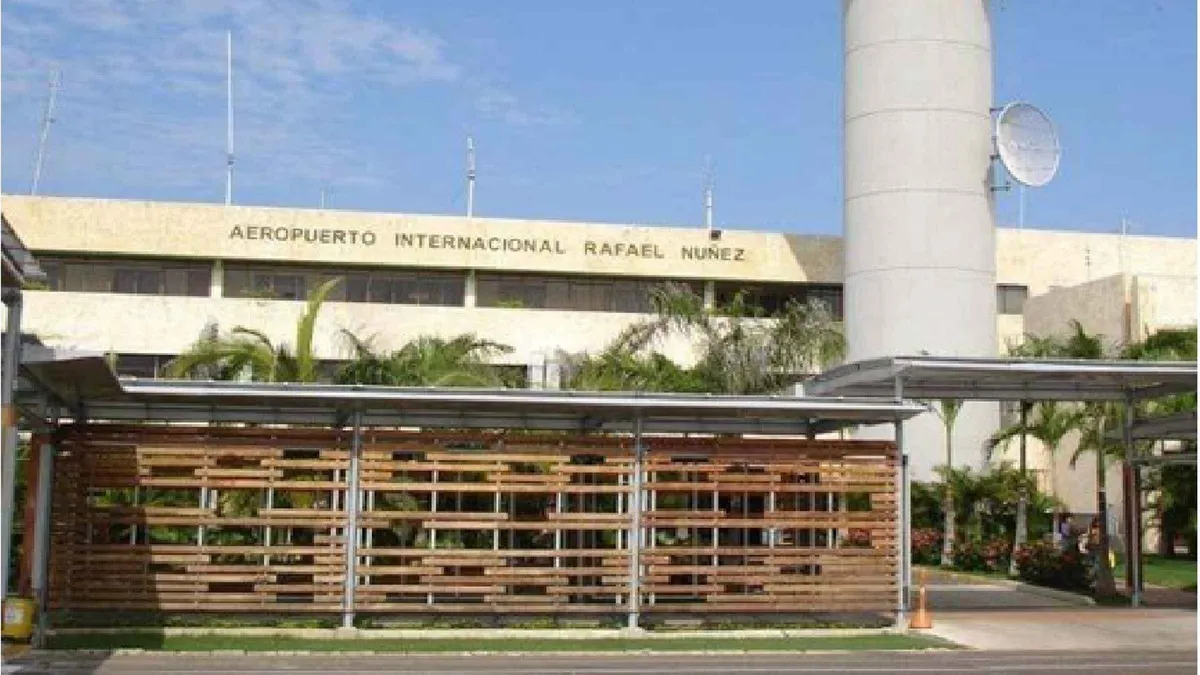 from $19
Cartagena Airport: Private Arrival or Departure Transfer
A private arrival or departure transfer with a driver holding a name sign, flexible for flight changes with four hours' notice. One review noted the driver waited in a tinted-window car that was hard to spot, so look for the name sign rather than a specific vehicle.
Check Availability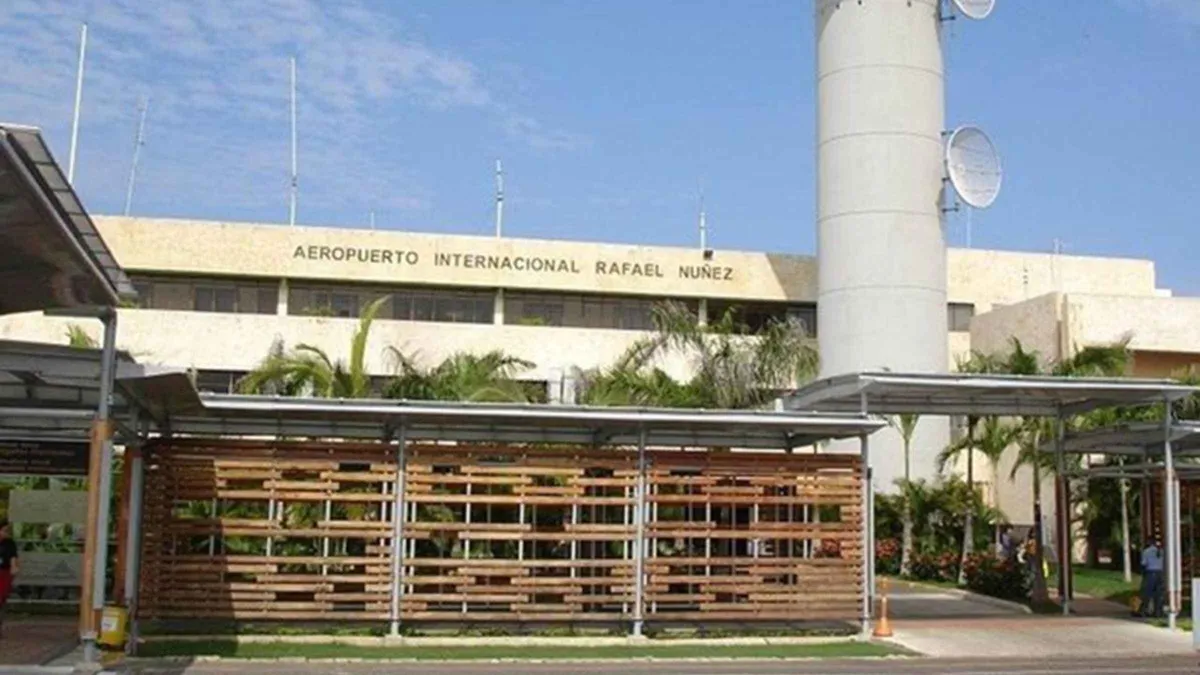 from $15.40
Cartagena: Rafael Nuñez Airport One Way Transfer
A one-way private transfer between Rafael Nunez Airport and any Cartagena hotel, with vehicle size scaled to group size. A round trip means booking the return leg separately with its own flight details.
Check AvailabilityPrices, ratings and details are the platform's own. dollar figures are the listed prices — the platform bills in your account's currency.
Where To Go Next
Safety and scams
Unlicensed cabs, fare hustles and pickpocket hotspots, and how to avoid every one.
Airport transfer
The full Rafael Núñez arrival guide, from the two authorized taxi stations to private options.
Where to stay
Pick a neighborhood that puts the walled city within walking distance.
Plan your trip
The complete Cartagena planning hub, from money to itineraries.
Getting around Cartagena: questions
What is the best way to get around Cartagena?
Walking, for most of it. The walled city, Getsemaní and the near end of Bocagrande are walkable and nothing in the historic core requires transport. For longer hops use Transcaribe at $1.24 (3,900 COP) a ride, or fixed-fare taxis. See the full breakdown in our getting around guide and our things to do picks.
Does Cartagena have Uber or Lyft?
Uber operates, alongside Didi and InDriver, in a legal gray zone. A 2026 bill that would have criminalized app rides was withdrawn, and there is no Cartagena-specific ban or legalization, so the situation is unresolved. Lyft does not operate in Colombia. For arrival day, compare with a private airport transfer instead.
Do taxis in Cartagena have meters?
No. Cartagena is the only Colombian city over 1 million people without taxi meters. Fares come from a printed fixed-fare control card under a decree. The 2026 minimum fare reads $3.89 (12,250 COP) under Decreto 0051, with a conflicting official snippet giving $3.11 (9,800 COP). Confirm the fare with the driver or your hotel before riding. More on unlicensed cabs in our safety and scams guide.
How much is the Transcaribe fare?
The single fare is $1.24 (3,900 COP), effective Friday 23 January 2026, up from $1.08 (3,400 COP). A differential fare of $0.32 (1,000 COP) off the standard fare applies to 27,000+ registered users, including students, older adults and Sisbén A/B holders, under Decreto 0176 of 19 May 2026.
Where do I take an official taxi at Rafael Núñez airport?
Use only the two authorized taxi stations, one at the national arrivals exit and one at the international arrivals exit. Press-relayed 2026 zone figures cite around $4.06 (12,800 COP) to the historic center and $6.92 to $8.73 (21,800 to 27,500 COP) to Bocagrande, but these are not the confirmed official decree. The full rundown is on our airport transfer page.
Where does the Cartagena bus terminal send buses?
Terminal de Transportes, in Sector Doña Manuela off Vía Cordialidad, serves Barranquilla, Santa Marta, Sincelejo, Montería, Valledupar, La Guajira, Bogotá and Medellín. Mompox, San Basilio de Palenque and Tolú have no confirmed terminal route in our sources and are likely minivan or colectivo operators. The exact street address is unverified officially.
Cartagena Transport On Camera
Three clips showing the Transcaribe system in use, the platform layout and the boarding routine described above, filmed on the actual network rather than reconstructed.
Using Transcaribe public transportation in Cartagena Colombia
A rider's walkthrough of buying a fare and boarding, matching the single-fare figures on this page.
Video: Ricardo GTranscaribe | This is Cartagena's public transportation
Shows the dedicated bus lanes and station platforms that make Transcaribe faster than a taxi in traffic.
Video: Jav CastillejoCartagena TRANSCARIBE public bus Transportation | Colombia Bus ride
An onboard ride showing what a Transcaribe trip across the city actually looks like.
Video: Colombia Plus ToursVideos load from YouTube only when you press play.
Prices, hours and terms are set by the venue or operator and confirmed at checkout.
We may earn a commission if you book through one of our links, at no extra cost to you. Full affiliate disclosure