 Cartagena City Guide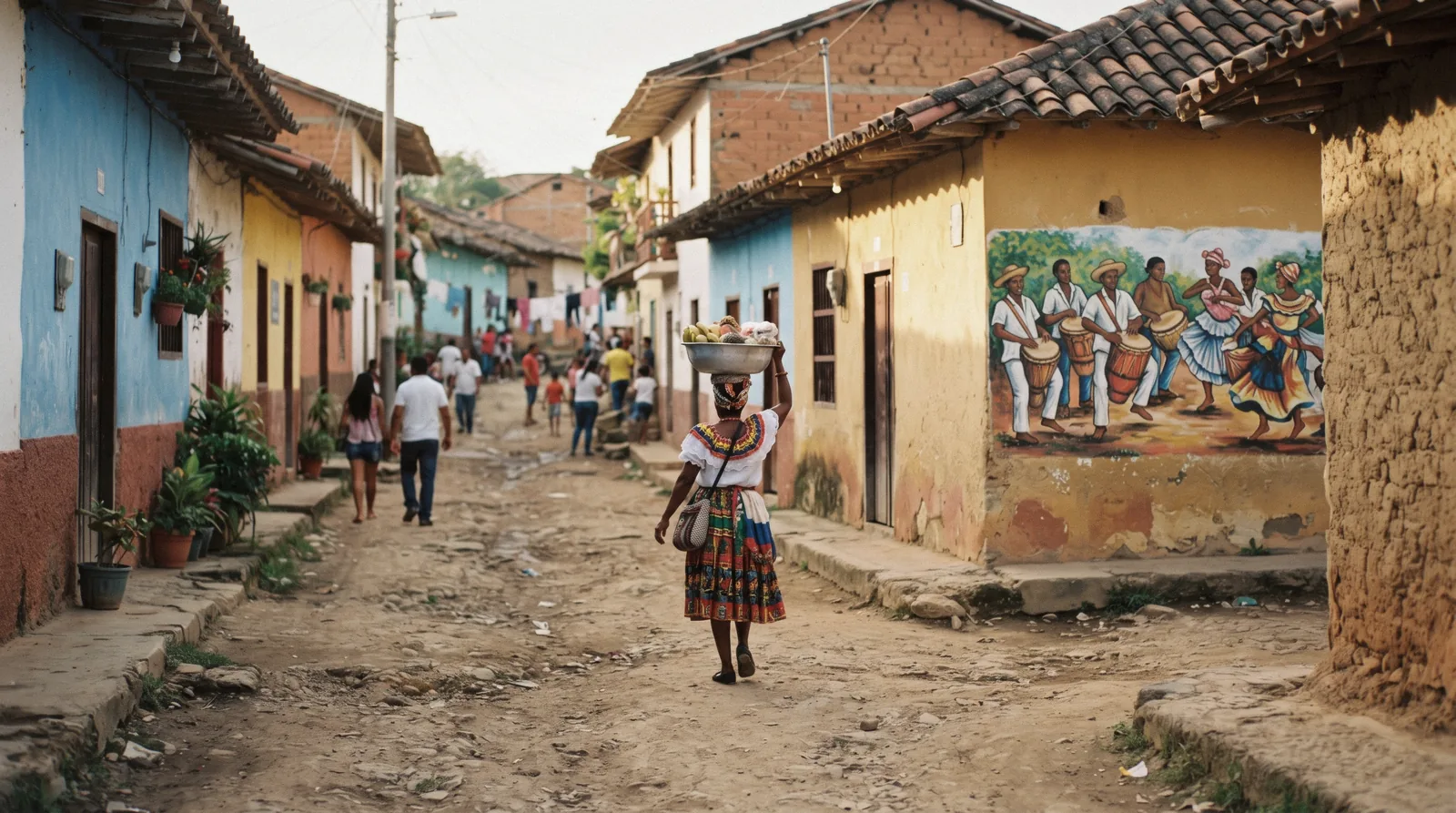
San Basilio de Palenque
San Basilio de Palenque is a village in the Montes de María foothills, about 50 kilometers southeast of Cartagena, and it holds a title no other town in the Americas can claim in the same way: the first free African town, founded by people who fought their way out of slavery rather than waiting for it to end. This independent Cartagena travel guide covers it as a day trip from the city, what UNESCO actually recognized here, what the Palenquero language is, what a tour costs, and an honest note on how much of that money the village itself sees. Beyond this page, the day trips from Cartagena overview compares it with the other trips out of the city, including Volcán del Totumo and Tierra Bomba.
Quick answer What San Basilio de Palenque is, what a day tour costs, and the honest note on tour operators
San Basilio de Palenque is a village about 50 km southeast of Cartagena founded by escaped slaves under Benkos Biohó and recognized by UNESCO as the Cultural Space of Palenque de San Basilio in 2005, the only place in the Americas where a maroon community's culture and language survived intact. No official entrance fee exists, since it is a living town, not a ticketed site, so what you actually pay for is a day tour, from $27.55 for a shared trip to $131.66 for an all-inclusive one.
Key takeaways
- The village has no ticket booth. Your money goes to a tour operator, and how much of that reaches the community depends heavily on which one you pick.
- Palenquero, spoken here, is the only Spanish-based creole language in South America, and it is worth reading about before you go rather than treating the visit as a folklore show.
- Short on a full day? Tierra Bomba and Volcán del Totumo are the other two day trips this guide covers if Palenque's roughly 4-hour round trip doesn't fit your schedule.
Key facts
Opening hours
| Year-round | Not applicable–Not applicable |
|---|
Closed None, it is an inhabited town rather than a ticketed attraction
Admission
- Adult
- No official entrance fee is published for San Basilio de Palenque itself
- Reduced
- Not applicable
- Free
- Walking the village is free. What you pay for is transport, a guide, lunch and a drum or dance show, bundled differently by each tour operator
Planning it
- Time needed
- Not officially stated. Most day tours from Cartagena block 4 to 6 hours total including transport, with roughly 2 to 3 hours actually spent in the village
- Book ahead
- Optional — walk-up usually fine
- Address
- Corregimiento of Mahates, Bolívar Department, Colombia, about 50 km southeast of Cartagena
San Basilio de Palenque has no official ticket office, so this table compares the two GetYourGuide tours in our listing rather than an admission grid. Prices in USD as listed.
The question that splits buyers is how much of the day you want built for you, since there is no ticket to compare, only two very differently priced day tours covering the same village.
| Option | Price | Includes | Cancel | Book |
|---|---|---|---|---|
| Shared day tripTravelers happy to arrange or add transport separately and keep the base cost down | From $27.55 | Guided visit, local lunch and a drum show. Round-trip transport is a separate line item on this listing, not built into the base price | Free up to 24 hours before | Check Availability |
| All-inclusive day tripTravelers who want pickup handled and a fuller cultural program in one booking, at close to five times the shared price | From $131.66 | Hotel pickup, bilingual local guide, a dance performance, lunch and a Palenquero language mini-class | Free up to 24 hours before | Check Availability |
Neither listing states what share of its price the village itself receives. See the honest note on tour operators below before you pick. Figures current in Q3 2026.
San Basilio de Palenque tours compared
Both tours cover the same village on the same kind of day, a shared bus or van out from Cartagena and back. The price gap comes from pickup, group size and how much of a show is built in, not from a different itinerary.
 from $27.55
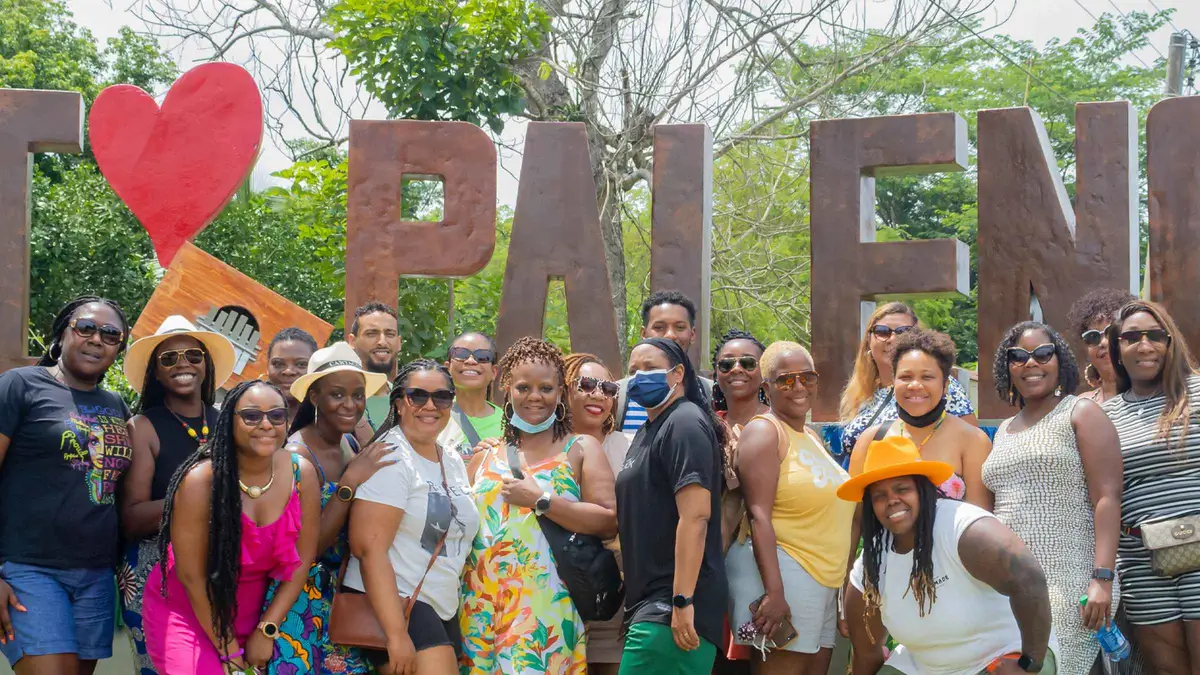
From Cartagena: San Basilio de Palenque Tour
A day trip to San Basilio de Palenque, the first free African town in the Americas, with a local lunch and an optional drum show. Round-trip transportation is a separate line item rather than built into the base price, which one reviewer used to book cheaper transport themselves.
Check Availability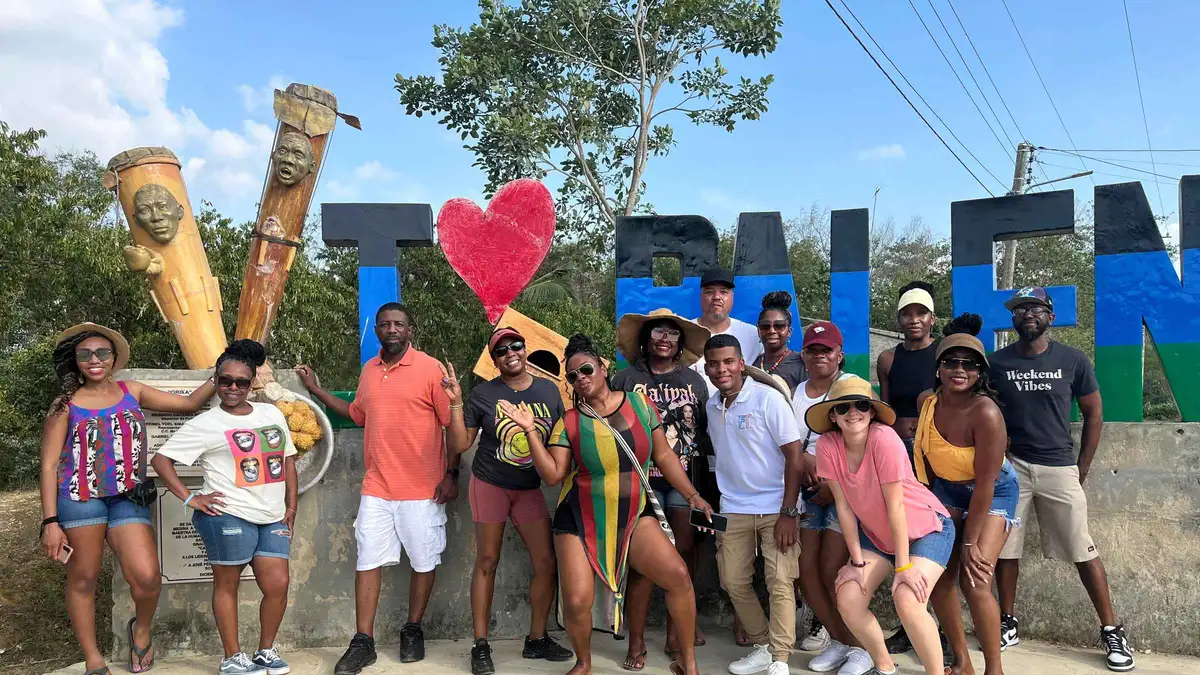 from $131.66
Palenque tour from Cartagena: History and Tradition
A pricier, all-inclusive version of the Palenque day trip with hotel pickup, a dance performance and a Palenquero language mini-class built in. The listing leans heavily on sales language, so weigh it against the cheaper shared option covering similar ground.
Check AvailabilityPrices, ratings and details are the platform's own. dollar figures are the listed prices — the platform bills in your account's currency.
The first free town in the Americas
In 1599, around 30 enslaved Africans escaped into the forest south of Cartagena under a leader named Benkos Biohó. They defeated the first armed expedition sent to recapture them, then kept fighting for decades. Biohó found a defensible spot in the Montes de María foothills and, according to the historical accounts inscribed on his statue in the village's main square, founded the settlement in 1603, barricading it with wooden palisades, a palenque, which gave the place its name.
The Spanish Crown captured and hanged Biohó in 1621, but the settlement did not fall. Escaped slaves kept arriving, and Palenque kept absorbing them. In 1713, after continued fighting, Bishop Antonio María Casiani signed an agreement granting the community its land on condition it stop taking in new runaways, a condition Palenqueros never really honored. In 1772 the settlement was folded into the Mahates district, and it has stayed part of that municipality ever since. Of the many palenques founded by escaped Africans across colonial Colombia, San Basilio de Palenque is the only one that survived to today, which is the core of why UNESCO singled it out.
What UNESCO actually recognized, and the language you'll hear
In 2005 UNESCO proclaimed the Cultural Space of Palenque de San Basilio a Masterpiece of the Oral and Intangible Heritage of Humanity, folded in 2008 into the Representative List of the Intangible Cultural Heritage of Humanity under file number 00102. The listing does not cover a building or a monument, it covers the living culture itself: the Palenquero language, the funeral ceremony called lumbalú, the social organization into groups called ma-kuagro, and the musical traditions built on Bantu-rooted rhythms like mapalé.
Palenquero is the reason linguists keep visiting. It is the only Spanish-based creole language spoken in South America, shaped by Kikongo, the language of Congo and Angola, and by Portuguese, the language of the slave traders who brought captive Bakongo people here in the 17th century. Its grammar differs enough from Spanish that the two are not mutually intelligible. As of a 2007 count reported by the New York Times, fewer than half of the roughly 3,000 residents still spoke it fluently, and community-based teaching efforts have worked since to keep it from fading further. If your tour includes a language mini-class, treat it as a genuine piece of the UNESCO listing, not a novelty add-on.
An honest note on tour operators
Neither of the tours in the comparison above states what portion of the price stays in San Basilio de Palenque versus what goes to the Cartagena-based operator, the driver and the van. That is common in day-trip tourism generally, but it matters more here, since the entire point of the visit is a community that survived by keeping its own resources and institutions intact. Community-run visits, where a local guide from the village leads the walk and the lunch is cooked and served by a village household, put more of your money directly into Palenque than a Cartagena agency subcontracting a driver and a generic guide who is not from the town.
We are not naming either operator above as better or worse on this point, since neither publishes a breakdown. The honest advice is to ask directly when you book, or once you arrive: who is guiding you, are they from Palenque, and does the lunch come from a household in the village. A guide who can answer those questions specifically, by name, is a reasonable sign the visit is more community-run than agency-run.
How much time to give San Basilio de Palenque
Three ways to route the day
No official source publishes a recommended visit length, since it is a town, not a ticketed site. These routings are our own estimate based on the roughly 2-hour drive each way from Cartagena.
| Routing | What it covers | What it skips | Time |
|---|---|---|---|
| Shared day tour | The village walk, a local lunch, a drum show | Hotel pickup, extra cultural detail | About 4 to 5 hours round trip |
| All-inclusive day tour | Hotel pickup, the walk, lunch, a dance performance and a language mini-class | Nothing built into the itinerary | About 5 to 6 hours round trip |
| Independent by bus and moto-taxi | The village on your own schedule, at the lowest cost | A guide who can explain the history and introduce you around | A full day, transport alone runs 2 to 2.5 hours each way |
San Basilio de Palenque in eight dates
-
1599
The first escape
About 30 enslaved Africans escape into the forest south of Cartagena under Benkos Biohó, defeating the first expedition sent after them. [Wikipedia, San Basilio de Palenque, read for this guide]
-
1603
The settlement is founded
Benkos Biohó establishes the palisaded settlement in the Montes de María foothills, the date inscribed on his statue in the main plaza today. [Wikipedia, San Basilio de Palenque]
-
1621
Biohó is captured and hanged
The Spanish capture and execute Benkos Biohó, accused of plotting against the crown. The settlement survives him. [Wikipedia, San Basilio de Palenque]
-
1691
A Royal Decree on freedom
The Spanish Crown issues a decree guaranteeing freedom to Palenque's Africans if the community stops taking in new runaways. [Wikipedia, San Basilio de Palenque]
-
1713
The community's own agreement
Bishop Antonio María Casiani signs an accord granting the community its land, a condition the village continued to defy by sheltering new arrivals. Around the same time the village takes the name San Basilio Magno. [Wikipedia, San Basilio de Palenque]
-
1772
Folded into Mahates
The settlement is included within the Mahates municipal district, where it remains today. [Wikipedia, San Basilio de Palenque]
-
2005
UNESCO proclamation
UNESCO proclaims the Cultural Space of Palenque de San Basilio a Masterpiece of the Oral and Intangible Heritage of Humanity. [ich.unesco.org, checked 2026-09-19]
-
2008
Formal inscription
The proclamation is folded into UNESCO's Representative List of the Intangible Cultural Heritage of Humanity, file number 00102. [ich.unesco.org, checked 2026-09-19]
Do
- Ask your guide, by name, whether they are from Palenque and whether lunch comes from a household in the village, a real sign of how community-run the visit is.
- Bring cash in small denominations for anything you buy directly from residents, market stalls or the drum and dance performers.
- Take the language and history seriously, ask questions about Palenquero words or the lumbalú funeral tradition rather than treating the visit as photos only.
- Wear light, modest clothing and closed shoes comfortable for walking unpaved village streets in full sun.
- Book a day ahead where possible, since tours run on a set daily departure rather than on demand.
Don't
- Do not expect a ticket booth or fixed hours, this is an inhabited town, and showing up without a booked tour or your own transport plan leaves you with a long, informal trip.
- Do not photograph residents up close without asking first, the same courtesy you would extend anywhere people live rather than perform for visitors.
- Do not assume the cheaper tour and the pricier one differ in what the village itself sees financially, neither publishes that breakdown.
- Do not plan a same-day return connection that is tight, the drive alone runs 2 to 2.5 hours each way and traffic out of Cartagena varies.
- Do not skip water and sun protection, there is little shade on the roughly 2-hour road trip and during the village walk itself.
Five things most visitors do not know about San Basilio de Palenque
- Of the many palenques founded by escaped Africans across colonial Colombia, this is the only one still standing. Every other maroon settlement of the period was destroyed or dispersed [Wikipedia, San Basilio de Palenque, read for this guide]. - Palenquero is not a dialect of Spanish, it is a separate creole language. Its grammar comes from a mix of Kikongo and Portuguese layered under Spanish vocabulary, and it is unintelligible to a Spanish speaker who has not studied it [New York Times via Wikipedia, San Basilio de Palenque]. - The village produced multiple world boxing champions. Antonio Cervantes, known as Kid Pambelé, and brothers Ricardo and Prudencio Cardona were all born here [colombia.co, San Basilio de Palenque feature]. - A cookbook written entirely in Palenquero won an international award. "Kumina ri Palenge pa tó paraje," written by 38 Palenqueros with recipes and instructions in their own language, won at the Gourmand World Cookbook Awards 2014 in Beijing against 15,000 entries from 184 countries [colombia.co, San Basilio de Palenque feature]. - The famous palenqueras selling fruit in Cartagena's streets, 50 km away, come from this same culture. The fruit-sellers in their colorful skirts and headwraps that tourists photograph across the walled city trace their tradition directly back to this village [colombia.co, San Basilio de Palenque feature].
Getting to San Basilio de Palenque
Most visitors go on a booked day tour, which is by far the simplest option: a shared or private van picks you up in Cartagena, drives roughly 2 to 2.5 hours, and returns the same afternoon or evening. Both tours in the comparison above handle this end to end, one with hotel pickup built in, the other treating transport as a separate arrangement.
Going independently is possible but slower and less predictable. The budget route reported by travelers is a bus from Cartagena's main bus terminal toward Mahates or San Juan Nepomuceno, then a short moto-taxi into the village from the highway junction, commonly cited as costing a small fraction of a tour but taking considerably longer door to door, over 2 hours each way including the connection. None of this is government-published as a fixed fare or schedule, so treat any specific price you hear at the terminal as negotiable, not fixed.
San Basilio de Palenque map
The village sits well inland from Cartagena in the Montes de María foothills, reached by highway rather than any coastal route.
Other day trips from Cartagena
San Basilio de Palenque has nothing else within walking distance, it is a standalone half or full day out. These are the other trips this guide covers if you're deciding between them.
Volcán del Totumo
The mud crater day trip, a shorter, lighter half day compared to Palenque's cultural and historical focus.
A separate day trip, about 50 km northeast of Cartagena in the opposite directionTierra Bomba
The closest island to the city and the fastest of the three trips this guide covers, a beach and fort half day rather than a full-day village visit.
A separate boat trip, 10 to 15 minutes across Cartagena's bayIslas del Rosario
The classic beach and snorkeling day trip, an entirely different kind of day than the cultural focus of Palenque.
A separate boat trip, roughly an hour offshoreSan Basilio de Palenque questions
Is San Basilio de Palenque worth visiting?
Yes, if you're interested in Afro-Colombian history and a living UNESCO-recognized culture rather than a beach or ruin. It is a roughly 4 to 6 hour round trip from Cartagena, so it suits travelers with a full free day, not a quick add-on.
How much does a tour to San Basilio de Palenque cost?
From $27.55 for a shared day trip with transport priced separately, to $131.66 for an all-inclusive version with hotel pickup, a dance show and a language class. See the full comparison.
Why is San Basilio de Palenque important?
It is the only surviving palenque, a settlement founded by escaped slaves, out of many established across colonial Colombia. UNESCO proclaimed its living culture, including the Palenquero language, a Masterpiece of the Oral and Intangible Heritage of Humanity in 2005, formally inscribed in 2008. Read the full history.
What language do people in San Basilio de Palenque speak?
Palenquero, the only Spanish-based creole language in South America, built from Kikongo and Portuguese roots layered under Spanish vocabulary. It is unintelligible to a Spanish speaker who has not studied it. Read more in the UNESCO and language section.
How far is San Basilio de Palenque from Cartagena?
About 50 km southeast of Cartagena, a drive commonly reported at 2 to 2.5 hours each way by road, longer if you go independently by bus and moto-taxi rather than a direct tour van.
Does the tour price to San Basilio de Palenque support the community?
Neither tour in our comparison publishes what share of the price stays in the village. Read the honest note on tour operators for what to ask before you book.
Prices, hours and terms are set by the venue or operator and confirmed at checkout.
We may earn a commission if you book through one of our links, at no extra cost to you. Full affiliate disclosure