 Cartagena City Guide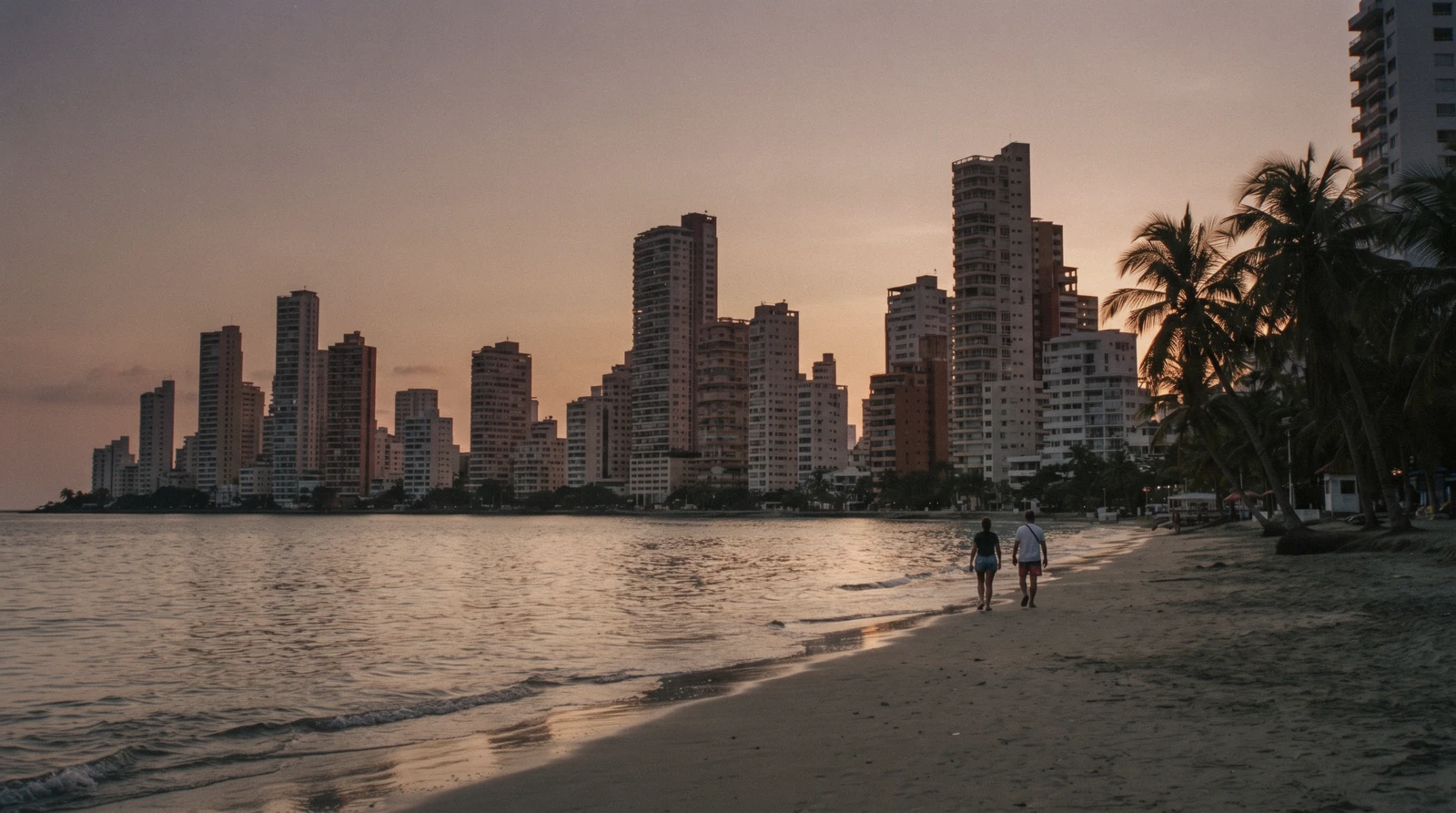
Bocagrande, Cartagena: The Towers, the Beach and Who It Suits
Bocagrande Cartagena is the high-rise beach peninsula south of the old town, and it is the part of the city most visitors picture when they imagine a beach resort. This page covers what its sand and towers actually deliver, how the Transcaribe and taxis connect it back to the walled centre, and who should base here rather than in the where-to-stay heart of the old city. For the colonial districts themselves, see Centro Histórico and Getsemaní. The rest of the city, priced the same way, sits in the Cartagena city guide.
Quick answer Bocagrande in brief
Bocagrande is a peninsula of high-rise hotel and apartment towers along a city beach of grey-gold sand, not the white sand of the islands offshore. A Transcaribe single fare to and from the walled centre costs $1.24 ($3,900 COP). It suits travellers who want a hotel pool, a beach chair and a taxi ride to the sights, not those who want colonial streets at their doorstep.
Key takeaways
- Compare the trade-off in our Centro Histórico guide before you book
- See verified hotels in the where-to-stay area list with Bocagrande named as an area
- The closest thing to a Bocagrande beach activity is this horse tour on Cartagena's beach
- For the city's other sand, read our guide to the beaches of Cartagena
Bocagrande Versus the Walled City
This is the guide's own comparison of the two most-booked bases in the city, drawn from what each district physically offers. It is not an official ranking and no tourism body publishes one. Use it to match your base to how you actually want to spend your evenings.
| What you get | Bocagrande | Centro Histórico / Getsemaní |
|---|---|---|
| Accommodation style | High-rise hotel and apartment towers with pools, often facing the sea | Colonial buildings, balconies and courtyards inside (or beside) the 16th-century walls |
| Beach access | Direct. The beach runs the length of the peninsula beside the towers | None in the district itself. The nearest city beaches are a ride away along the coast |
| Evening walkability | Concentrated along Avenida San Martín, restaurant and shop fronts under the towers | The whole district is the evening. Plazas, cafes and bars are steps apart on foot |
| Connection to the sights | A ride along Avenida San Martín or Avenida Santander, or the Transcaribe, into the walled city | The sights are the district. The walls, plazas and museums start at your door |
Figures current in Q3 2026.
Tours That Work From a Bocagrande Base
An honest note first: none of the tours below is a Bocagrande-specific tour, and no dedicated bookable tour in our data departs from or is centred on Bocagrande. What follows are the closest honest options. One is a beach horse ride near the city, two are bay sunset boats whose routes include skyline views of the Bocagrande towers, and one is the walking tour of the walled city that Bocagrande connects to.
 from $43
HORSE TOUR IN CARTAGENA BEACH
A 1-hour horseback ride at Manzanillo del Mar, about 20 minutes north of the city, with hotel pickup and a welcome drink included. One review flagged a confusing pickup point near Port 1 that turned out to be a taxi rather than the operator's own vehicle, so confirm the WhatsApp instructions before you go.
Check Availability from $28.80
2-hour tour in Cartagena Sunset View in party boat
A 2-hour open-bar boat party around Cartagena Bay with nightclub entry included afterward, departing at 5, 7 or 9pm. The listing states it's not suitable for anyone prone to seasickness or motion sickness, and the meeting point can shift by ticket option.
Check Availability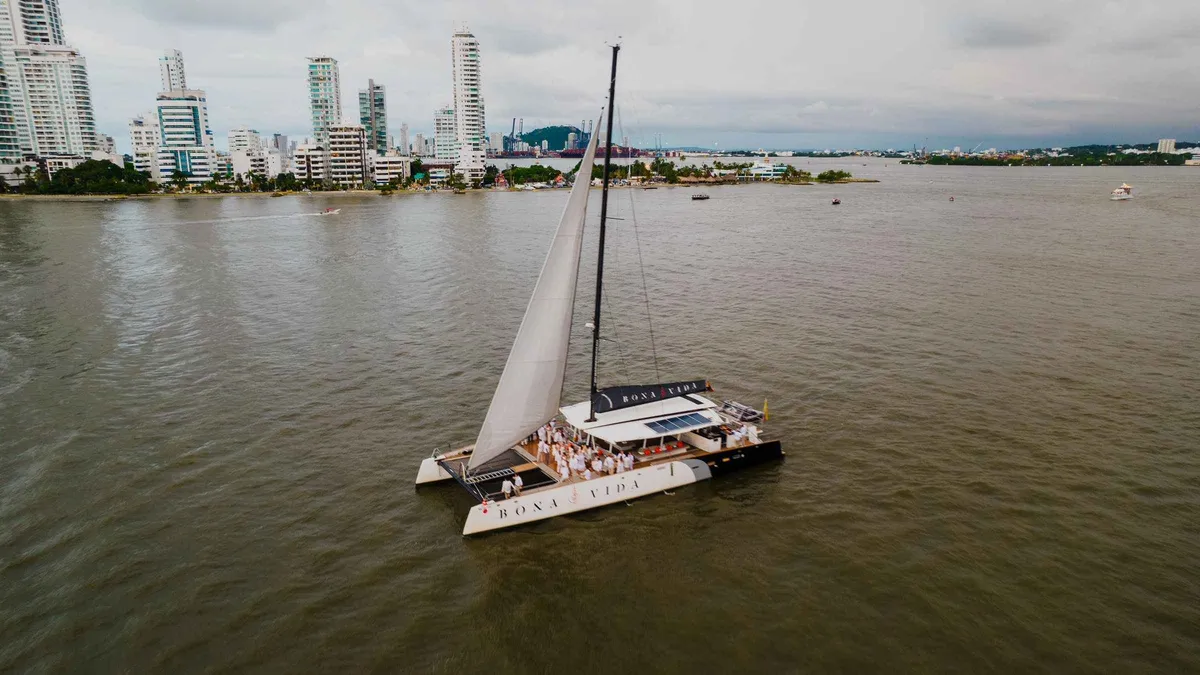 from $41.35
Cartagena de Indias: 2-Hour Sunset Cruise
A calmer 2-hour catamaran sunset cruise around the bay with a drink and appetizer included, boarding from the Bodeguita dock. It's listed as wheelchair accessible, and the route can shift for weather or at the captain's discretion.
Check Availability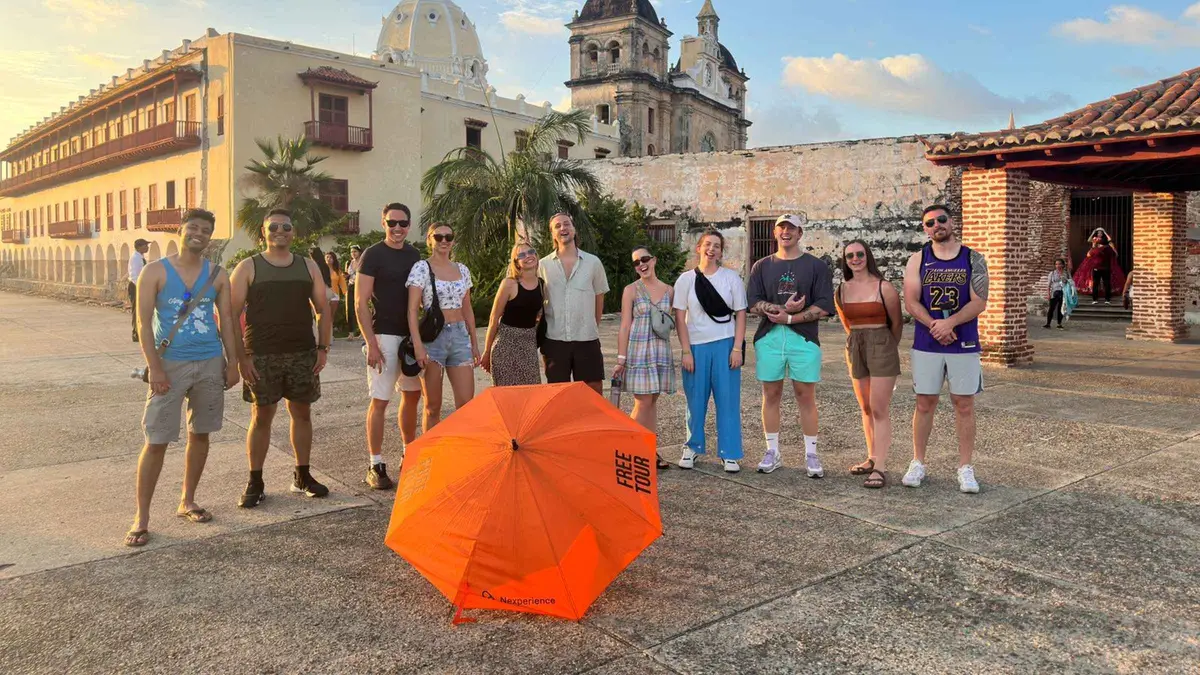 from $14.81
Cartagena: Historic Center and Getsemaní Shared Walking Tour
A shared 2.5-hour walk through the Walled City and into Getsemani, covering the slave-trade history, the Clock Tower and the plazas behind it. Groups can run large since it's a shared departure, and there's no seating or shade break built into the route.
Check AvailabilityPrices, ratings and details are the platform's own. dollar figures are the listed prices — the platform bills in your account's currency.
The Beach and the Towers
The two facts that define the district, stated plainly.
A Peninsula of Towers
Bocagrande is a long, narrow peninsula joined to the mainland near the old town and running south-west into the Caribbean. Along its spine stand the city's tallest buildings, hotel and residential towers in rows, many of them with their main pools and terraces facing the water. This is modern Cartagena.
If you arrive expecting the low colonial rooflines of the walled city, the skyline comes as a surprise. The two districts, background summarised on Bocagrande's Wikipedia page, belong to the same city and sit on the same coastline, but they look like different worlds, and it takes one ride along the connecting avenues to feel the change.
Grey-Gold Sand, Not White Sand
Set expectations before you unpack a towel. Bocagrande's sand is grey-gold in colour, a city-beach sand, and the sand is one of the first things travellers comment on when their mental image was the Caribbean of postcards. The famously white sand near Cartagena belongs to the Islas del Rosario and to Playa Blanca on the Barú peninsula, and both sit outside the city, reached by boat or by the Barú road.
Bocagrande's offer is different. It is the convenience of sand within walking distance of your hotel room, not a castaway beach. Judge it as a city beach and it makes sense.
The Seafront Promenade
Between the sand and the towers runs a wide seaside promenade, Avenida Santander, with the beach on one side and restaurants, shops and hotel entrances on the other. In practice it is the district's living room. People walk it in the evening, eat and drink along it, and use it as the address system of the whole neighbourhood, since almost everything a visitor needs fronts either the promenade or the parallel inland avenue, Avenida San Martín.
Together the two avenues carry all the traffic between Bocagrande and the historic centre, and we describe the journey in detail in the getting-around section below.
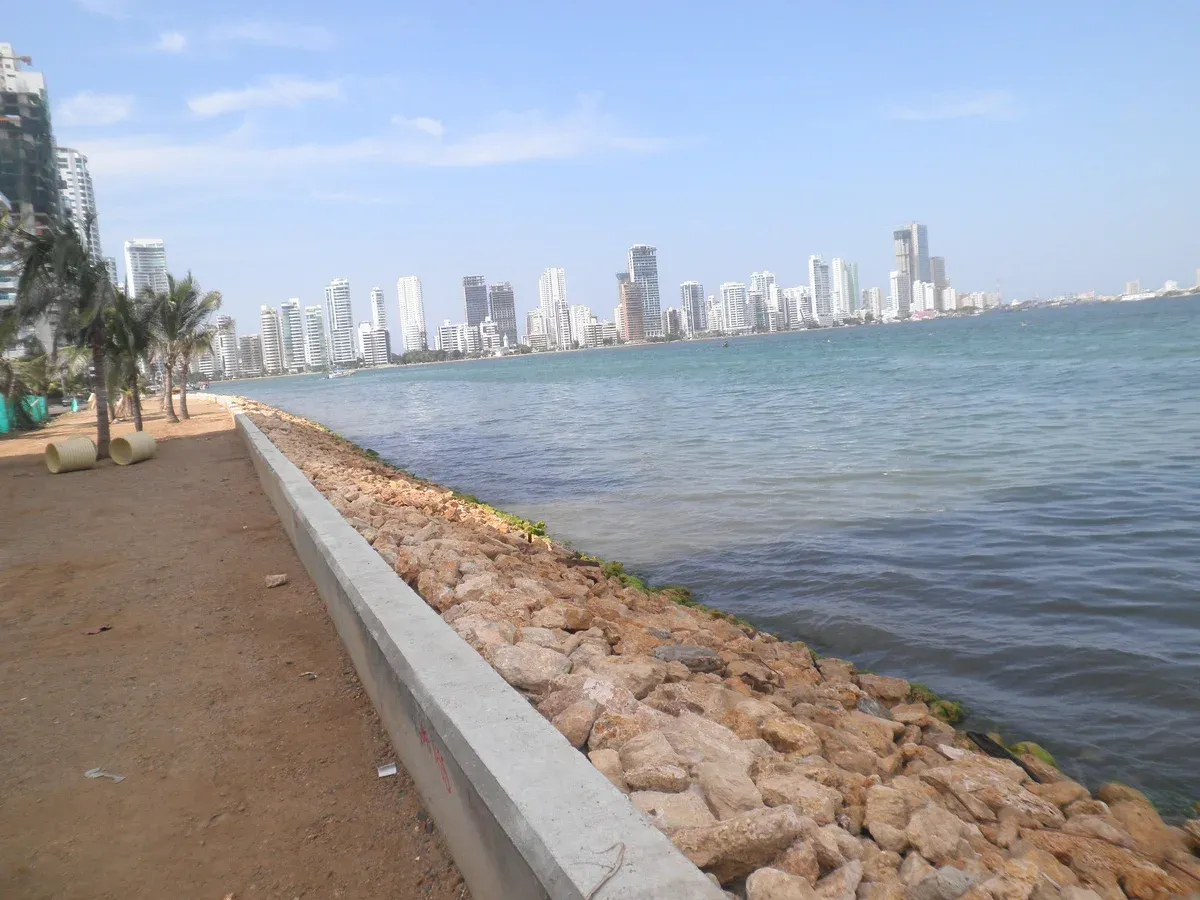
The Bocagrande shoreline, with the peninsula's hotel towers rising behind the rock revetment that holds back the surf. Photo: CivArmy, CC BY-SA 4.0, via Wikimedia Commons
The Vendor Pattern on the Sand
What to expect from selling on Bocagrande beach, described honestly and without invented prices.
Repeated Approaches, Not One Pass
Selling on Bocagrande's sand is a persistent tourist-district pattern, and it helps to understand its shape before you settle on a chair. Vendors work the beach continuously rather than passing once. Approaches typically come for hair braiding, massages, sunglasses, fruit, drinks and boat trips, and the same vendor category will often return more than once over the course of an hour.
Travellers who enjoy the energy find it part of the city-beach experience. Travellers who want quiet should know in advance that quiet is not what this sand sells. A polite no and a return to your book is the standard rhythm, and the pattern is normal for the district rather than a sign you have been singled out.
No Official Price Table for This Beach
Here is the part most guides skip. No official price table for Bocagrande's own beach vendors, for chair rental, food or drinks, was found in our research. We will not quote you figures for this beach, because none could be confirmed, and we would rather say so than dress up another beach's numbers.
If you read a price list for Bocagrande elsewhere, treat it with suspicion and confirm in person before committing. Agree any price before a service starts, whether it is a chair, a massage or a plate of fish. For a fuller picture of how street and beach selling works across the city, see Safety and Scams.
Water Quality, Flags and What Nobody Publishes
The honest gaps in the official picture, because you will search for these and find silence.
No Confirmed Water-Quality Bulletin
No official water-quality bulletin for Cartagena's beaches, Bocagrande included, was found in our research, neither from INVEMAR nor from any health authority. We state that plainly rather than telling you the water is clean or dirty, because no official source we could reach says either. The same applies to warning flags.
No official Cartagena-specific lifeguard or flag-warning system page could be confirmed from the Alcaldía, DIMAR or the Capitanía de Puerto, so we cannot tell you that Bocagrande runs a formal flag system, and you should not treat any flag colours you see on the sand as an officially published scheme. Swim with the caution you would use anywhere no authority publishes water data, keep to guarded stretches in front of the hotels, and ask your hotel about local conditions on the day.
What the District Is Reported to Monitor
One partial exception exists, and we report it as reported rather than confirmed. The district's disaster and risk office, OAGRD, is reported by cartagena.gov.co, via a search snippet rather than a direct re-fetch (the primary page returned an access error), to monitor wave-height increases affecting Bocagrande, Marbella and La Boquilla during swell events. Our own attempt to reach the primary page returned an access error, so we cannot verify the detail of what they publish or when.
What it means for you is practical. During strong swell days the sea along this open coast can change quickly, the district does track it, and your hotel front desk is the fastest way to hear about any local warning. For the broader city picture on street-level problems, our Safety and Scams page covers the patterns that apply here as everywhere in Cartagena.
Getting to Bocagrande, and Back to the Walled City
Fares, avenues and the honest way to move between the beach and the old town.
Transcaribe and the Fixed-Fare Taxis
Bocagrande connects to the wider city, including the walled centre, on the Transcaribe bus rapid transit system and on fixed-fare taxis. Taxis run on a printed fare card rather than a meter, so the driver points to a card rather than watching a dial. The airport-zone figures below come from a secondary press relay of the district decree rather than the decree text itself, so treat them as reported.
Expect the beach to cost roughly twice the old town from the airport. The fuller, honestly-flagged picture of citywide taxi fares, including a live conflict over the minimum fare, is on our Getting Around page.
| Route | Fare | Source |
|---|---|---|
| Transcaribe, single fare (citywide) | $1.24 ($3,900 COP) | transcaribe.gov.co, effective 23 Jan 2026 |
| Airport to Bocagrande/Castillogrande (zone 5) | $8.73 ($27,500 COP), reported | quebuenafm.co, relaying the district decree |
| Airport to the historic centre | $4.06 ($12,800 COP), reported | quebuenafm.co, relaying the district decree |
The Connecting Avenues
Bocagrande sits at a walkable-to-driveable distance from the Centro Histórico, and two routes join them. Avenida San Martín runs inland as the district's commercial spine, while Avenida Santander hugs the seaside with the water on one side. Together they form one continuous corridor between the towers and the city walls.
No official minute or kilometre figure for the walk was found in our research, and we will not invent one. What we can say is that the corridor is direct, lined with food and shops the whole way, and that most visitors do it once on foot out of curiosity and then take the Transcaribe or a taxi for the return. The same corridor is the route a taxi takes from the old town when you come back from a day among the plazas, so the district you choose decides whether this ride is a daily commute or a rare crossing.
Fares and route details are kept current on Getting Around.
Who Bocagrande Actually Suits
The district is excellent for some travellers and a mistake for others. Here is the split.
Choose Bocagrande If You Want a Pool, a Chair and Space
Bocagrande suits families and beach-first travellers well. The pattern is simple. You get a high-rise hotel, often with a proper pool, reliable air conditioning and elevators, steps from a city beach where you can rent a chair for the day and watch the vendors pass.
Dinner is a short walk along the promenade, and the day's biggest decision is pool or sea. This is also the right base if you plan your sightseeing in focused outings, a morning in the old town, an island day trip, with a calm, comfortable room to come back to. On our where to stay page Bocagrande appears as a named area with listed hotel addresses, alongside the two colonial districts.
Note what we could not confirm: no nightly rate figure for Bocagrande specifically was verified in our research, so we publish no price band for the area here.
Stay in the Old Town If You Want Streets, Not Towers
If the reason you came to Cartagena is the colonial city itself, Bocagrande will disappoint you, and it is kinder to say so up front. The plazas, the balconies, the street food and the bars that spill out at night belong to Centro Histórico and Getsemaní, and from Bocagrande every evening begins with a ride. Travellers who want to step out of their door into a lit-up plaza, wander on foot after dinner and feel the walled city at night should book inside the walls.
Getsemaní in particular has become the neighbourhood for travellers who want nightlife and street culture within a few minutes' walk. Bocagrande trades all of that for sand, towers and room to breathe. Both are legitimate choices.
They are simply different holidays, and the honest test is this: at 9 p.m., do you want a beachfront restaurant under a tower, or a plaza inside a 400-year-old wall?
The Common Compromise: Split Your Stay
A number of visitors solve the trade-off by splitting their trip rather than picking one district for the whole visit. A few nights in Bocagrande at the start or end of the trip, book-ended around a stretch inside the walls, gives you the pool and the beach chair for recovery days and the plazas and street life for the days you came to see. It costs one extra hotel booking and one Transcaribe or taxi ride between bases, against the fare and travel detail on Getting Around.
For a short trip of three or four nights this rarely makes sense, since the beach and the old town are close enough that a single walled-city base with day trips to the sand covers both. For a longer stay it is a genuinely practical way to get both experiences without compromising on either one.
Near Bocagrande
The districts and islands most often combined with a Bocagrande stay.
Centro Histórico
The walled colonial city is the sight Bocagrande exists to serve, and the two are joined by one direct seaside corridor. Read our full guide to Centro Histórico before deciding which side of the ride you want to sleep on.
Along the Avenida San Martín corridorGetsemaní
The street-art and nightlife district beside the old town. For travellers torn between a tower and a plaza, our Getsemaní page covers the third option, colonial-adjacent streets with the city's most active evening scene.
Just past the walled city on the same side of the bayIslas del Rosario
The white-sand archipelago that Bocagrande's sand is not, an easy day trip by boat from the city. Boats and the national park fee are covered on our Islas del Rosario page.
By boat from the city's docksBocagrande Questions
Is Bocagrande, Cartagena worth visiting?
Yes, if you want a beach chair and a hotel pool within walking distance. It is worth visiting for travellers who want a resort-style base, and less worth it for anyone who wants colonial streets outside the door, which is Centro Histórico or Getsemaní instead. See the full comparison above for the trade-off.
Is Bocagrande beach white sand?
No. The sand is grey-gold, a city beach, and the famous white sand near Cartagena sits offshore at the Islas del Rosario and on Barú. Judge Bocagrande as convenient sand beside your hotel rather than a postcard beach.
How do I get from Bocagrande to the walled city?
Two ways. The Transcaribe bus rapid transit system connects Bocagrande to the centre for a single fare of $1.24 ($3,900 COP), or you take a taxi along the Avenida San Martín and Avenida Santander corridor. Fares and the citywide taxi picture are on Getting Around.
Are there lifeguards or warning flags on Bocagrande beach?
No official Cartagena-specific lifeguard or flag-warning system page could be confirmed in our research from the Alcaldía, DIMAR or the Capitanía de Puerto, so we cannot state that a formal flag system operates here. What is reported, though not independently confirmed, is that the district risk office OAGRD monitors wave increases along this coast during swell events. More context is on Safety and Scams.
How much do beach chairs and drinks cost on Bocagrande?
We do not quote figures, because no official price table for Bocagrande's own beach vendors was found in our research. Vendor selling for chairs, massages, hair braiding and drinks is a persistent pattern on this sand, so agree any price before a service starts. The pattern and the wider city context are covered on Safety and Scams.
Are there tours that start in Bocagrande?
None in our data. No dedicated bookable tour departs from or is centred on Bocagrande. The closest honest options are a horse tour on Cartagena's beach at $43 (rated 4.7 from 184 reviews) and the shared historic center and Getsemaní walking tour at $14.81 (4.9 from 3,510 reviews) in the walled city.
Should I stay in Bocagrande or the old town?
Choose Bocagrande if you want a high-rise hotel with a pool and a beach chair at your door, and choose the old town if you want colonial streets and nightlife on foot. The full trade-off is set out in our comparison above and in the guides to Centro Histórico and Getsemaní, and named hotel areas with addresses are on the where-to-stay page.
Prices, hours and terms are set by the venue or operator and confirmed at checkout.
We may earn a commission if you book through one of our links, at no extra cost to you. Full affiliate disclosure